
Executive Summary & Industry Imperative
High-voltage power transformers represent the single largest capital asset in electrical substations, industrial power plants, and renewable energy facilities. With average grid transformer fleets globally exceeding 30 to 35 years of service, utility directors and global procurement managers face critical decisions regarding capital expenditure (CAPEX) versus operational expenditure (OPEX). A comprehensive Transformer Lifetime Assessment (TLA) moves organizations away from reactive failure management toward predictive health indexing, preventing catastrophic grid blackouts and optimizing asset lifecycles.
1. Understanding Transformer Degradation: The Physics of Thermal & Dielectric Aging
A power transformer does not age uniformly. While metallic components like structural steel cores and tank enclosures experience minimal physical breakdown under normal conditions, the internal insulation system—comprising mineral or ester dielectric fluid and cellulose insulation paper (kraft paper)—undergoes continuous, irreversible thermodynamic degradation.
The lifetime of a transformer is fundamentally defined by the physical state of its solid cellulose insulation. As cellulose fibers degrade under thermal, oxidation, and hydrolytic stress, their mechanical tensile strength deteriorates until the paper becomes brittle. Under transient electrical faults or electrodynamic forces caused by external short circuits, brittle paper insulation can fracture, leading to turn-to-turn dielectric breakdown, explosive arc flashover, and total asset destruction.
Chemical Mechanisms Driving Cellulose Degradation
Procurement engineers evaluating Transformer Lifetime Assessment protocols must track three primary chemical pathways:
- Thermal Pyrolysis: Accelerated by high operating temperatures (elevated winding hot-spot temperatures). Thermal degradation cleaves the long-chain glucose rings of the cellulose molecule.
- Hydrolytic Degradation: Water acts as a catalyst in cracking glycosidic bonds. Every doubling of moisture content inside solid insulation cuts the paper’s remaining life expectancy by approximately 50%.
- Oxidative Degradation: Dissolved oxygen in dielectric fluid reacts with cellulose and oil, producing organic acids and polar sludge that deposit on cooling ducts, further elevating hot-spot thermal resistance.
Quantitative Metric: Degree of Polymerization (DP)
New kraft insulation paper possesses an initial Degree of Polymerization (DP) value between 1,000 and 1,200 (representing the average number of anhydroglucose rings in paper polymer chains). When thermal and chemical stress reduces the DP value down to 200 - 250, the paper reaches its end-of-life (EOL) criterion, possessing zero remaining mechanical tensile strength.
2. The Transformer Lifetime Assessment (TLA) Diagnostic Framework
To accurately evaluate Remaining Useful Life (RUL), Federal Power Transformers LLC utilizes an integrated multi-tiered testing matrix aligned with international standards including IEC 60076-7, IEEE C57.104, IEC 60599, and CIGRE guidelines.
| Assessment Tier | Diagnostic Test Method | Technical Target Parameter | Strategic Maintenance Outcome |
|---|---|---|---|
| Tier 1: Fluid & Gas Screening | Dissolved Gas Analysis (DGA) & Oil Quality Analysis (OQA) | Concentrations of H₂, CH₄, C₂H₂, C₂H₄, C₂H₆, CO, CO₂; Acid Value, IFT, Breakdown Voltage | Early detection of thermal hot spots, arcing, partial discharge, and oil acidification rate. |
| Tier 2: Paper Health Diagnostics | HPLC Furan Compounds Analysis & Methanol-in-Oil Testing | 2-Furaldehyde (2-FAL) concentration in mg/kg; Direct estimation of cellulose DP value | Non-invasive measurement of solid paper degradation state without opening the tank. |
| Tier 3: Electrical & Dielectric Integrity | Sweep Frequency Response Analysis (SFRA) & FDS (Dielectric Spectroscopy) | Winding mechanical displacement/deformation, moisture percentage in solid paper insulation | Identifies physical core/winding damage post-short-circuit and exact moisture percentage. |
| Tier 4: Mechanical & Thermal Profiling | Partial Discharge (PD) Acoustic/Electrical Monitoring & Infrared Thermography | PD pC levels, localized thermal anomalies on bushings, radiators, and tap changer contacts | Pinpoints localized insulation voids, loose connections, and cooling efficiency loss. |
Dissolved Gas Analysis (DGA) & Duval Triangle Interpretation
Dissolved Gas Analysis remains the cornerstone of transformer condition diagnostics. Under thermal and electrical stress, mineral oil molecules break down into characteristic combustible gases. By deploying advanced diagnostic tools like Duval Triangle 1 & 4 and Rogers Ratios, our diagnostic specialists classify internal fault dynamics:
- Methane (CH₄) & Ethane (C₂H₆): Low-temperature thermal fault (< 300°C).
- Ethylene (C₂H₄): High-temperature thermal fault (> 700°C), typically caused by core overheating or loose joint connections.
- Acetylene (C₂H₂): High-energy arcing fault. Presence of C₂H₂ requires immediate operational intervention and dielectric withstand risk assessment.
- Carbon Monoxide (CO) & Carbon Dioxide (CO₂): Thermal degradation of solid cellulose insulation system.
For severe tropical, desert, or heavy industrial operational environments—such as oil refineries, offshore platforms, and solar farms across the Middle East and Africa—thermal stress is compounded by extreme ambient temperatures (exceeding 50°C). A continuous or periodic Transformer Lifetime Assessment is vital to prevent unscheduled downtime.
3. Transformer Product Lines & Lifetime Optimization Solutions
Federal Power Transformers LLC not only executes comprehensive factory and field Lifetime Assessments but also manufactures robust replacement assets and engineer-led overhaul solutions tailored for long-term power grid resilience up to 100 MVA, 132kV class.
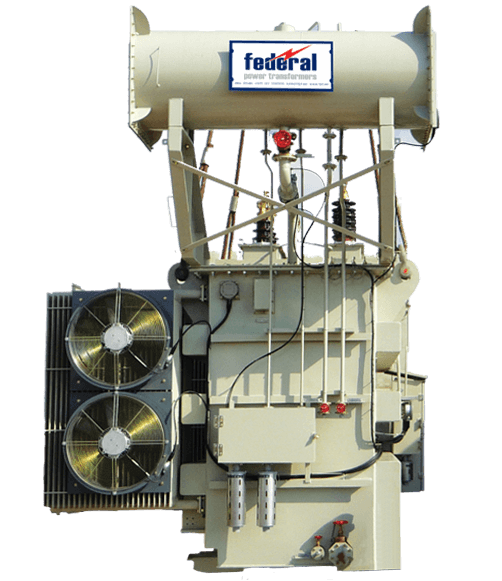
Power & Distribution Transformers
Liquid-immersed power transformers up to 100 MVA, 132kV class. Custom-engineered with low thermal gradient windings and low-loss magnetic cores to maximize operating lifespan.
Get Catalog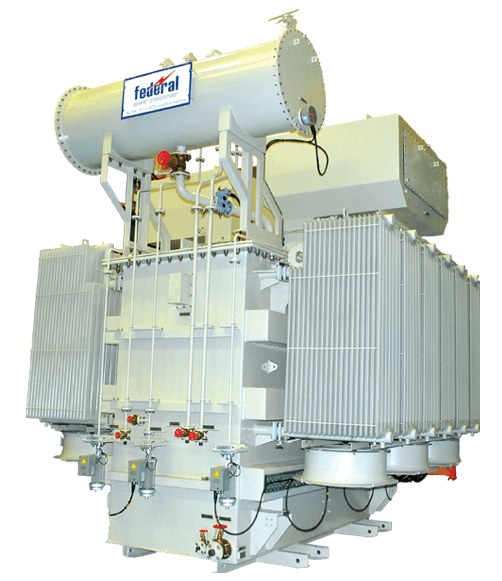
Oil & Gas Sector Transformers
Heavy-duty, flame-retardant transformers engineered specifically for harsh petrochemical, refinery, and offshore environments with reinforced thermal insulation margins.
Get Catalog
Cast Resin Dry-Type Transformers
Moisture-proof, self-extinguishing Class F/H insulated dry-type transformers up to 15 MVA. Ideal for indoor substations, commercial towers, and cleanrooms.
Get Catalog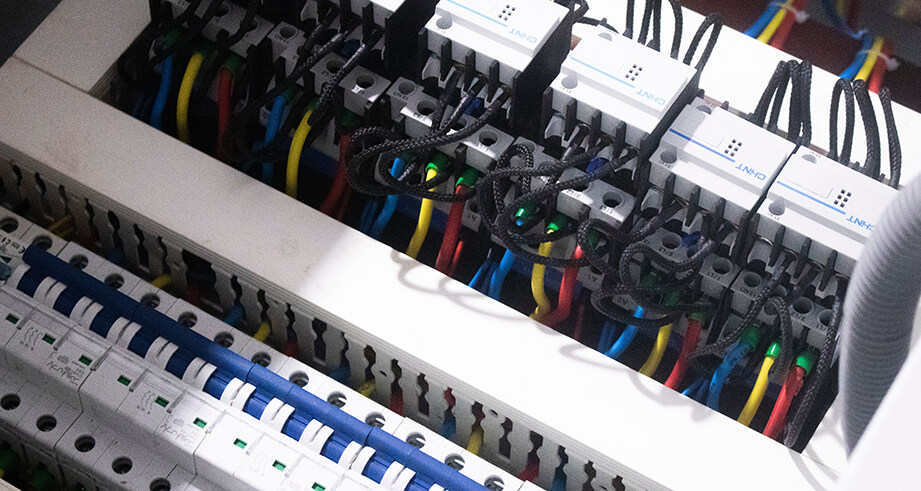
Mobile Substation Transformers
Fully mobile trailer-mounted transformer substations up to 132kV for emergency restoration, grid bypass during overhaul, and temporary heavy-load support.
Get Catalog4. Future Procurement & Technology Trends in Transformer Asset Management
Global power procurement strategies are shifting rapidly. Buying decisions are no longer strictly governed by lowest initial purchase price (CAPEX); rather, procurement executives evaluate Total Cost of Ownership (TCO), carbon footprint, and digital monitoring capabilities over a 40-year horizon.
Key Industry Development Trends:
A. Digital Twins and Online Real-Time Health Index (RHI) Systems
Modern transformer procurement specs increasingly mandate integrated IoT sensor suites. By combining online multi-gas DGA monitors, optical fiber winding hot-spot sensors, and bushing power factor monitors into a Cloud/SCADA Digital Twin, asset managers dynamically calculate the transformer's Health Index in real-time. Algorithm-driven thermal models dynamically compute Arrhenius aging rates based on actual hourly load profiles and weather data.
B. Transition to Biodegradable Natural & Synthetic Ester Fluids
Replacing traditional mineral oil with synthetic or natural ester dielectric liquids significantly extends cellulose lifetime. Esters exhibit high moisture tolerance—absorbing water out of the solid kraft paper into the fluid—which reduces hydrolytic cellulose breakdown by a factor of 2 to 4 while raising flash points above 300°C (K-class fire safety).
C. Scope 3 Carbon Reduction via Life Extension vs. Replacement
Procurement teams subject to ESG guidelines recognize that manufacturing a new 50 MVA 132kV transformer involves substantial embodied carbon (copper mining, electrical steel production, tank fabrication). Extending the operational lifetime of an existing unit by 15-20 years through high-vacuum oil purification, cellulose re-drying, tap changer overhaul, or complete active-part rewinding offers substantial carbon savings and CAPEX deferral.
D. Automated On-Load Tap Changer (OLTC) Diagnostic Sensors
Historically, over 30% of transformer in-service failures originate within the On-Load Tap Changer (OLTC). Future procurement requirements prioritize vacuum-switch OLTC technologies coupled with dynamic contact resistance measurement (DCRM) and vibration acoustic analytics to detect contact wear prior to thermal runaway.
5. Mathematical Modeling of Remaining Useful Life (RUL)
During a formal Transformer Lifetime Assessment, OEM engineers utilize mathematical aging models defined by IEEE C57.91 and IEC 60076-7. The relative aging rate ($F_{AA}$) for a given hot-spot temperature ($\Theta_{H}$) is calculated as:
When the winding hot-spot temperature exceeds the standard reference temperature of 110°C (for thermally upgraded paper), the rate of life consumption accelerates exponentially. For example, operating continuously at a hot-spot temperature of 122°C doubles the insulation aging rate ($F_{AA} = 2.0$), consuming two days of transformer lifespan for every single day of operation.