Package Unit Transformers: Engineering Specification & Global Procurement Guide
An authoritative technical evaluation of Package Unit Transformers and Compact Unit Substations (CUS). Written for utility planners, EPC project managers, and electrical engineers procuring high-reliability step-down and step-up packaged power systems for harsh ambient operational environments.
IEC 62271-202 & ANSI/IEEE C57.12 Compliant Engineered for 55°C Ambient Desert Derating Up to 100 MVA / 132 kV Engineering Capability
1. Executive Overview: Demystifying Package Unit Transformers
In modern industrial electrification, grid infrastructure expansion, and utility power distribution, the Package Unit Transformer—frequently referred to in utility frameworks as a Packaged Substation (PSS) or Compact Unit Substation (CUS)—represents a fully integrated, factory-assembled power conversion center. Unlike traditional open-yard substations that demand extensive civil works, multi-vendor equipment integration, and field-wired interconnections, a Package Unit Transformer integrates three critical electrical subsystems into a single, factory-tested, touch-safe enclosure:
Medium Voltage (MV) Switchgear Compartment: Houses Ring Main Units (RMU), circuit breakers, or load break switches utilizing SF6, clean-air, or vacuum interruption technology up to 36 kV or higher.
Transformer Compartment: Houses either a high-efficiency liquid-immersed transformer (mineral oil or biodegradable synthetic ester fluid) or a flame-retardant Cast Resin Dry-Type Transformer.
Low Voltage (LV) Distribution Switchboard: Incorporates Air Circuit Breakers (ACB), Molded Case Circuit Breakers (MCCB), power factor correction (PFC) banks, and intelligent metering units.
Global procurement teams in renewables, petrochemical processing, infrastructure, and mining are increasingly migrating toward Package Unit Transformers to mitigate site installation risks, minimize physical footprint, and ensure rigorous compliance with IEC 62271-202 (High-voltage/Low-voltage prefabricated substations) and IEEE C57.12.28 enclosure integrity standards.
SEO Information Gain Note: Semantic Differentiation in Power Distribution
Package Unit Transformer vs. Pad-Mounted Transformer: While both are factory-enclosed, a standard Pad-Mounted Transformer typically combines the liquid tank and high/low voltage cable compartments into a single dead-front cabinet dedicated primarily to simple step-down distribution. A true Package Unit Transformer (CUS) incorporates an independent, segregated Medium Voltage Ring Main Unit (RMU) with multi-way switching, advanced protection relays, and fully compartmentalized LV switchboards, facilitating complex loop or radial grid automation.
2. Engineering Specifications & Technical Matrix
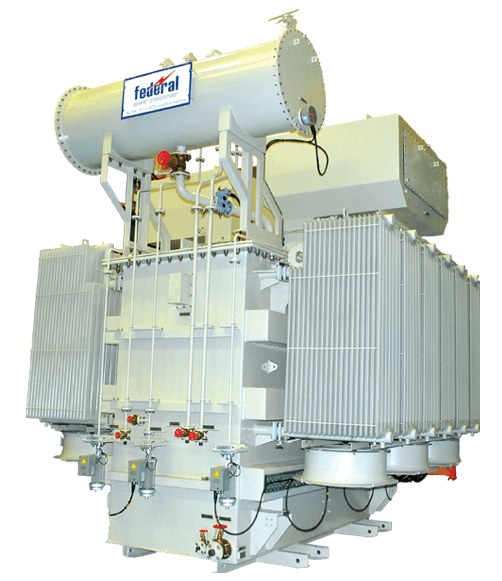
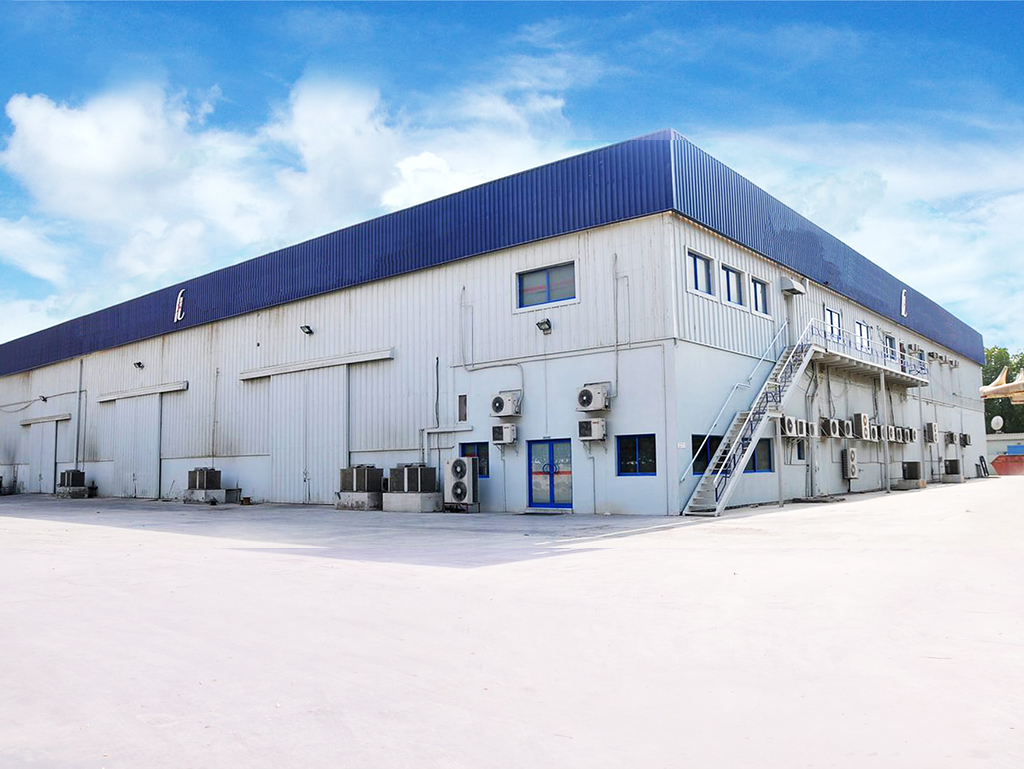
Federal Power Transformers LLC (FPT), operating from ICAD 1, Abu Dhabi, manufactures custom-engineered Package Unit Transformers built to endure severe ambient environments, including ambient temperatures exceeding 55°C, high relative humidity, and heavy atmospheric salinity (C5-M corrosion class). Below is the comprehensive technical matrix for electrical engineers and procurement specialists:
Engineering Parameter
Liquid-Immersed Package Unit
Cast Resin Dry-Type Package Unit
Skid-Mounted Industrial Mobile Package
Power Rating Range
250 kVA up to 10,000 kVA (10 MVA)
100 kVA up to 5,000 kVA (5 MVA)
500 kVA up to 25 MVA (Utility Mobile)
Primary Voltage Class
Up to 36 kV (Custom up to 132 kV)
Up to 36 kV
Up to 132 kV Substation Class
Insulation & Cooling
ONAN / ONAF (Mineral Oil / Synthetic Ester)
AN / AF (Class F or H Insulation)
ONAN / ONAF / OFAF Liquid Cooled
Enclosure Protection (IP)
IP54 / IP55 / IP65 (Compartmentalized)
IP23 (Indoor) / IP54 (Outdoor Enclosure)
Heavy-Duty Steel IP55 / Heavy Transport Frame
Internal Arc Classification
IAC AB 20kA 1s (IEC 62271-202)
IAC AB 16kA 1s or Custom E-House
IAC AB 25kA 1s High-Safety Barrier
Ambient Thermal Rating
Designed for 50°C - 55°C Ambient Rise
Class H Thermal Index (180°C)
Extreme Ambient Radiator Design
Corrosion Resistance Class
C4 to C5-M (ISO 12944 Paint System)
C4 Industrial / Galvanized Steel
C5-M Offshore / Marine Grade Polyurethane
Applicable Standards
IEC 60076, IEC 62271-202, ANSI C57
IEC 60076-11, IEC 62271-202
IEC 60076, IEEE C57, ADDC / DEWA / Aramco
Thermal Derating & Heat Dissipation Dynamics in High-Ambient Regions
A critical engineering failure mode in standard package unit transformers deployed in desert regions (e.g., GCC, North Africa, Australia) is thermal suffocation. Because the transformer is enclosed inside a housing, solar radiation combined with high ambient temperatures can elevate internal enclosure temperatures above 65°C. Federal Power Transformers addresses this via 3D computational fluid dynamics (CFD) thermal modeling:
Thermal Enclosure Class (IEC 62271-202): FPT enclosures are rated for Enclosure Class 10 or Class 15, ensuring the internal temperature rise attributable to the housing does not exceed 10K to 15K under full load.
Double-Walled Sun-Shield Roofs: Reduces solar heat flux absorption by over 65%, preventing top-oil temperature overshoot.
Natural Convection Louvers with Sand Trap Filters: Custom louver geometry prevents dust and sand ingress while maintaining unforced ONAN cooling pathways.
3. Flagship Package Unit Transformer Configurations
Depending on grid topology, environmental hazards, and space constraints, Federal Power Transformers provides four distinct package unit transformer configurations for global procurement teams:
Utility & Grid
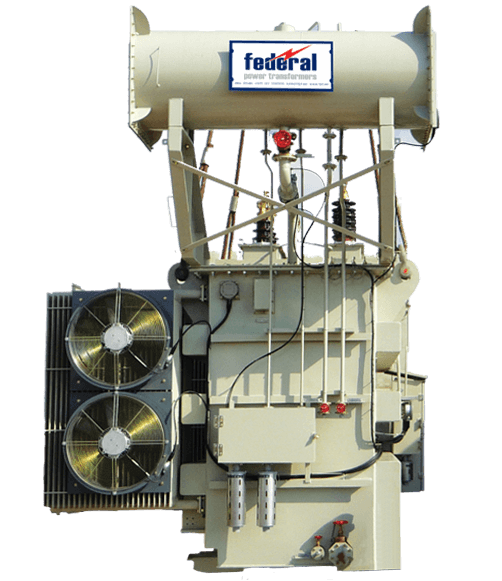
Oil-Immersed Compact Package Unit Transformer
Engineered for urban distribution networks, commercial developments, and industrial parks. Combines a hermetically sealed oil transformer with a gas-insulated RMU and custom LV distribution panel.
Rating: 500 kVA – 3,150 kVA
Voltage: 11kV, 22kV, 33kV to 415V
Key Feature: Low-loss silicon steel core, zero moisture contamination.
Designed specifically for refineries, offshore oil platforms, and chemical processing facilities requiring strict fire safety, blast resistance, and C5-M marine painting systems.
Optimized for utility-scale solar farms. Integrates multiple low-voltage inputs directly from central solar inverters, stepping power up to 33kV or 66kV for grid connection.
Self-extinguishing, fire-safe package units for indoor basements, healthcare facilities, data centers, and public infrastructure where mineral oil leaks pose environmental risks.
Rating: 250 kVA – 4,000 kVA
Fire Class: F1 / E2 / C2 certified
Maintenance: Virtually zero maintenance, moisture-proof
The global market for Package Unit Transformers is undergoing a transformation driven by grid decarbonization, industrial digitalization, and stricter environmental regulations. Procurement directors must anticipate the following key market developments over the next decade:
1. Transition to Biodegradable Ester Fluids
Utilities are replacing mineral oil with synthetic and natural ester fluids (e.g., MIDEL 7131, FR3). Ester fluids offer high fire points (>300°C), eliminating the need for expensive fire-deluge walls, and are 100% biodegradable within 28 days.
2. IoT & Digital Twin Integration
Modern Package Units feature smart sensors monitoring dissolved gas analysis (DGA), oil temperature, bushing vibration, and partial discharge in real-time. Data is fed into cloud-based predictive maintenance systems via IEC 61850 protocol.
3. EV Fleet Charging & Microgrids
The rapid expansion of high-power EV charging hubs requires ultra-compact 33kV-to-LV package units capable of handling continuous cyclic dynamic load spikes without thermal breakdown.
Furthermore, regional utility authorities such as Abu Dhabi Distribution Company (ADDC), Dubai Electricity and Water Authority (DEWA), Saudi Aramco, and OQ Oman are mandating Internal Arc Classification (IAC AB) testing. This safety rating ensures that in the unlikely event of an internal short-circuit explosion, explosive gases and blast pressures are directed vertically away from maintenance personnel standing outside the enclosure.
5. Enterprise Buyer FAQ: Answers to High-Intent Procurement Queries
Below are expert answers to the most frequent technical, operational, and commercial questions asked by electrical engineers, EPC contractors, and global buyers when specifying Package Unit Transformers:
In technical industry terminology, the terms are often used interchangeably. However, a Package Unit Transformer specifically emphasizes a close-coupled, direct-flanged connection between the medium-voltage Ring Main Unit (RMU), the transformer, and the low-voltage cabinet without intermediate cable runs. A broader Package Substation may include walk-in service aisles, auxiliary battery rooms, and multi-transformer arrangements inside a modular housing.
Standard IEC 60076 ratings assume a maximum ambient temperature of 40°C and a 30°C daily average. When operating in ambient conditions of 50°C to 55°C (common in the Gulf region), a standard off-the-shelf transformer must be derated by 15% to 25% to prevent winding thermal insulation breakdown. Federal Power Transformers designs custom windings with lower temperature rise limits (e.g., 50/55°K rise instead of 60/65°K rise) and oversized cooling radiators, allowing the package unit to deliver 100% full nameplate kVA without derating.
For coastal or desert environments, the Medium Voltage (RMU) and Low Voltage switchboard compartments should be rated at IP54 or IP55 to protect sensitive electronic relays and busbars from fine dust particles and salt spray. The transformer radiator section can utilize an IP23 or IP34 louvered configuration for natural cooling, or be housed in an IP55 enclosure equipped with forced air-to-air heat exchangers.
Yes. All transformer designs manufactured at our ICAD 1, Abu Dhabi facility undergo rigorous engineering validation. Our core designs have been fully type-tested and certified by independent internationally accredited laboratories (such as CESI, KEMA, or ASTA) in compliance with IEC 60076-5 short-circuit withstand requirements and IEC 62271-202 internal arc requirements.
Yes, provided the enclosure is engineered with suitable IP54 protection, anti-condensation space heaters, and temperature-controlled forced cooling fans (AF). Cast resin package units are ideal for environmentally sensitive locations such as water catchment areas or crowded urban infrastructure where oil containment bunds are unfeasible.
Standard utility-spec package units (e.g., 500 kVA to 2,000 kVA 11kV) typically ship within 8 to 12 weeks from technical drawing approval. Specialized units requiring custom vector groups (e.g., Dyn11, YNd11), special OLTCs, or ester fluid filling are delivered within 12 to 16 weeks, backed by fast-track engineering workflows using 3D Autodesk Inventor software.
6. Why Global Procurement Teams Partner with Federal Power Transformers LLC
Established in 2006 in Abu Dhabi, UAE, Federal Power Transformers LLC (a flagship unit of Federal Electric) has earned a reputation as a trusted manufacturer for utility authorities, oil & gas majors, and EPC leaders across the MENA region, Europe, Africa, and Asia.
Advanced Manufacturing Hub: Based in Plot No 87-A4, Sector N-41, ICAD 1, Mussafah, Abu Dhabi, featuring state-of-the-art climate-controlled, dust-free winding rooms and automated vacuum drying ovens.
Full Range Capability: Engineering design and production of transformers up to 100 MVA, 132 kV class, backed by comprehensive repair and tap-changer overhaul facilities.
Certified Quality Standards: Fully certified to ISO 9001:2015 (Quality), ISO 14001:2015 (Environmental), and ISO 45001:2018 (Occupational Health & Safety).
Target Zero EHS Culture: Uncompromising commitment to zero workplace harm, zero environmental pollution, and 100% compliance with local and international statutory laws.
Request Technical Specifications & RFQ Pricing
Need customized Package Unit Transformers for your upcoming electrical infrastructure project? Connect directly with our Abu Dhabi engineering team for detailed technical proposals, CAD drawings, and factory direct quotations.

 Utility & Grid