High-Voltage Dielectric Integrity
1. Precision Partial Discharge Analysis Services for Critical Grid Assets
In modern high-voltage (HV) and extra-high-voltage (EHV) power infrastructure, the electrical insulation system represents the single most critical determinative factor for asset longevity and operational safety. Partial Discharge Analysis Services serve as the ultimate non-destructive diagnostic line of defense, detecting localized electrical stress concentrations before catastrophic dielectric breakdown occurs. Partial discharge (PD) is defined by IEC 60270 as a localized electrical discharge that only partially bridges the insulation between conductors, which may or may not occur adjacent to a conductor.
Whether in oil-immersed power transformers up to 100 MVA, 132kV class, or dry-type cast resin units, unmonitored partial discharge activity inevitably leads to progressive chemical decomposition, carbon tracking, and localized thermal ablation of organic insulation materials (paper, pressboard, epoxy resin, or synthetic esters). Global utility operators, oil and gas engineering procurement managers, and renewable energy facility directors require rigorous, physics-driven PD testing to mitigate unplanned outages, prevent multimillion-dollar asset destruction, and optimize condition-based risk management (CBRM) protocols.
Information Gain: Core Physics of Partial Discharge Breakdown Mechanisms
Partial discharge activity initiates when the local electric field strength ($E$) exceeds the localized dielectric breakdown strength ($E_{bd}$) of a gas void, micro-cavity, moisture inclusion, or structural impurity within the insulation matrix. Because the relative permittivity ($\epsilon_r$) of gas inclusions ($\epsilon_r \approx 1$) is significantly lower than that of transformer oil ($\epsilon_r \approx 2.2$) or solid cellulose ($\epsilon_r \approx 4.5$), the electric field intensity concentrates disproportionately within the void. This results in localized electron avalanche, ion bombardment, and high-frequency current pulses characterized by nanosecond rise times ($t_r < 1 \text{ ns}$ to $10 \text{ ns}$).
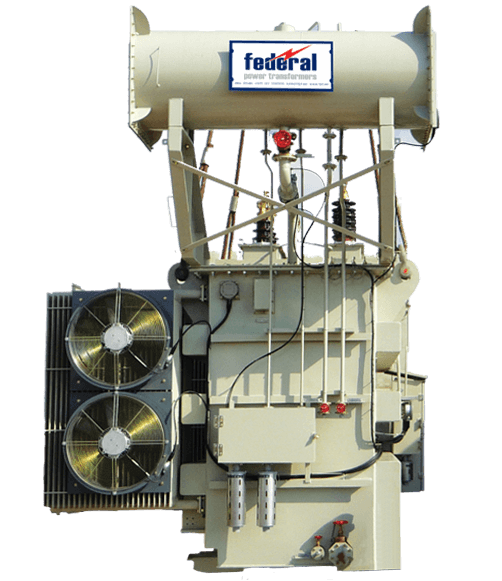
Figure 1: Federal Power Transformers' Abu Dhabi facility utilizing advanced screening and high-precision sensors for 132kV transformer Partial Discharge Analysis.
1.1 Classification of Partial Discharge Phenomena in Electrical Equipment
A comprehensive procurement specification for Partial Discharge Analysis Services must differentiate between distinct discharge modes, each exhibiting unique Phase-Resolved Partial Discharge (PRPD) signatures and degradation velocities:
- Internal Cavity Discharges: Occur inside solid insulation cavities (e.g., voids in cast resin or delaminated cellulose paper pressboard). Characterized by high repetition rates during the first and third quadrants of the applied sinusoidal voltage wave, producing high energy degradation over time.
- Surface Discharges (Tracking): Manifest at the interface of different insulation media (e.g., oil-solid barrier boundaries or outer bushings). Surface tracking generates continuous treeing patterns along pressboard barriers, culminating in rapid surface flashover.
- Corona Discharges: Take place at sharp conductive points or un-grounded metallic hardware exposed to high electric fields in air or gas. Corona exhibits tight phase-locking around the negative or positive voltage peaks.
- Particle-Initiated Discharges: Driven by free-moving metallic micro-particles in liquid dielectric insulation, which bridge voltage gaps and trigger intermittent micro-arcing under high hydrodynamic and electro-magnetic forces.
Service Offering Matrix
2. Recommended Diagnostic Services & Technical Methodology
Federal Power Transformers LLC provides an end-to-end portfolio of Partial Discharge Analysis Services tailored for industrial power grids, offshore oil and gas rigs, solar PV step-up substations, and utility transmission systems. Our testing methodologies adhere strictly to international standards including IEC 60270, IEEE 400.3, CIGRE WG A2.27, and BS EN 60076-3.
Off-Line IEC 60270 PD Acceptance Testing
High-precision apparent charge ($q$) quantification in picoCoulombs (pC) performed during factory acceptance testing (FAT) or major turnaround overhauls. Uses calibrated coupling capacitors and quadrupole impedance units.
- Charge Sensitivity: < 2 pC baseline noise
- Applied Voltage: Up to 200% rated $V_n$
- Standards: IEC 60270, ANSI C57.12.90
Continuous Online UHF & HFCT Monitoring
Non-intrusive online PD detection using Ultra-High Frequency (UHF 300 MHz – 1.5 GHz) drain-valve sensors and High-Frequency Current Transformers (HFCT) attached to neutral grounds and cable shields.
- Frequency Band: 100 kHz – 1.5 GHz
- Zero-Downtime installation
- Real-Time PRPD Pattern Streaming
Acoustic & Ultrasonic Fault Localization
Multi-channel acoustic emission (AE) testing using piezo-electric sensors (150 kHz resonance) anchored externally to the transformer tank. Utilizes Time Difference of Arrival (TDOA) algorithms for 3D spatial mapping.
- Spatial Precision: Within ± 5 cm
- Acoustic Band: 20 kHz to 400 kHz
- Geometric Triangulation Mapping
Cast Resin Dry-Type PD Screening
Specialized field and shop screening for cast resin dry-type transformers installed in high-rise buildings, data centers, and clean rooms. Detects micro-cracking and epoxy void ionization.
- Non-destructive structural audit
- In-situ TEV & Electromagnetic probe
- Guaranteed PD level < 10 pC
Hybrid DGA & PRPD Integrated Assessment
Cross-correlation of Dissolved Gas Analysis (Key Gases: Hydrogen $H_2$, Acetylene $C_2H_2$, Methane $CH_4$) with live PRPD plots to confirm thermal versus electrical discharge severity.
- Duval Triangle & Pentagon correlation
- Comprehensive asset health index
- Combined chemical & physical audit
Tap Changer Overhaul PD Audit
Targeted diagnostic inspection of On-Load Tap Changers (OLTC) and Off-Circuit Tap Changers (OCTC). Isolates contact sparking, dynamic transition arcing, and barrier insulation degradation.
- Mechanical & electrical sync verification
- Contact wear dynamic indexing
- Prevents OLTC explosive failure
| Diagnostic Parameter |
IEC 60270 Galvanic Method |
UHF (Ultra-High Frequency) |
HFCT (High Frequency CT) |
Acoustic Emission (AE) |
| Bandwidth Range |
100 kHz – 500 kHz |
300 MHz – 1.5 GHz |
500 kHz – 50 MHz |
30 kHz – 300 kHz |
| Quantification Unit |
Apparent Charge (pC) |
Signal Power (dBm / mV) |
Charge / Current (pC / mA) |
Acoustic Amplitude (dB / μV) |
| On-Line Applicability |
Restricted / Requires Filter |
Excellent (Non-invasive) |
Excellent (Ground Straps) |
Excellent (Tank Exterior) |
| Noise Immunity |
Low (Requires Shielded Room) |
Very High (Attenuates Grid Noise) |
Moderate (Needs Gating) |
High (Immune to EM Noise) |
| Primary Objective |
Factory Acceptance & Compliance |
Online Trend Monitoring |
Substation Cable & Ground PD |
3D Spatial Fault Location |
Market & Technological Evolution
3. Future Procurement Trends & Development Vectors in PD Analysis (2025–2035)
Global procurement teams evaluating Partial Discharge Analysis Services are witnessing a paradigm shift driven by grid modernization, green energy integration, and AI-enabled diagnostic asset management. Key industry vectors shaping procurement requirements over the next decade include:
3.1 Paradigm Shift: From Periodic Off-Line Testing to Continuous Edge-AI Online Monitoring
Traditional utility maintenance regimes relied upon time-based periodic off-line testing conducted during scheduled shutdowns every 3 to 5 years. Modern risk management frameworks prioritize continuous, online multi-sensor monitoring. Advanced procurement specifications now mandate Edge-AI processing units embedded directly within transformer control cabinets. These edge systems process high-speed Phase-Resolved Partial Discharge (PRPD) matrix data locally, filtering background electromagnetic interference (EMI) via neural network classification algorithms and transmitting real-time Risk Health Indices to utility SCADA/IoT platforms.
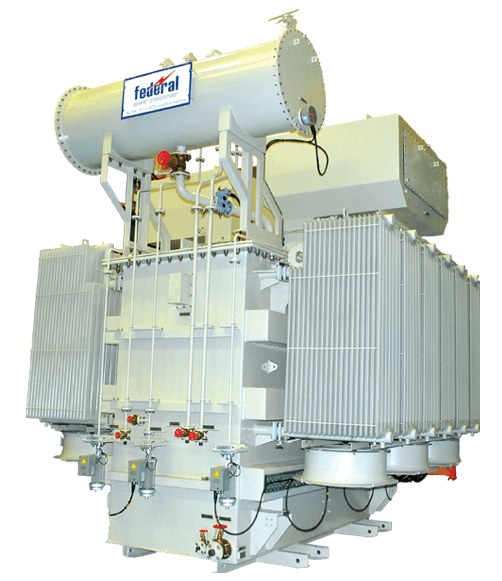
Figure 2: Heavy-duty transformer diagnostic integration for oil & gas energy infrastructure, engineered for extreme desert and offshore environments.
3.2 Impact of Renewable Inverter Harmonics & Fast $dV/dt$ Voltage Transients
The rapid expansion of utility-scale solar PV plants and wind farms introduces high-frequency Pulse-Width Modulation (PWM) harmonics and steep $dV/dt$ voltage transients generated by power electronics inverters. These non-sinusoidal voltage waveforms accelerate dielectric polarization stress, resulting in higher partial discharge inception voltages (PDIV) and decreased extinction voltages (PDEV). Modern PD analysis services must incorporate wideband high-voltage impulse generators and fast-transient digital recorders capable of capturing harmonic-driven micro-discharges that conventional power-frequency tests overlook.
3.3 SF6 Phase-Out & Alternative Eco-Friendly Ester Dielectrics
With global decarbonization mandates accelerating the retirement of Sulfur Hexafluoride ($SF_6$) and traditional mineral oils, procurement managers are transitioning toward Natural and Synthetic Ester fluids. Ester liquids possess higher dielectric permittivity and higher viscosity, which fundamentally alters gas bubble dynamics and streamer propagation paths. Modern diagnostic teams must utilize updated calibration curves and acoustic velocity corrections tailored to ester-filled transformers to ensure precise pC quantification and spatial location accuracy.
Authoritative Enterprise Strengths
4. Why Global Utilities & EPC Contractors Partner with Federal Power Transformers
Established in 2006 in Abu Dhabi, UAE, Federal Power Transformers LLC (FPT)—a premier unit of Federal Electric—stands as an international powerhouse in high-voltage transformer manufacturing, engineering repair, and field diagnostic services. Our expertise extends across power, distribution, oil & gas, renewable energy, and dry-type transformers up to 100 MVA, 132kV class.
State-of-the-Art ICAD 1 Testing Facility
Our manufacturing and service hub located in Industrial City of Abu Dhabi 1 (ICAD 1, Mussafah) features a fully shielded, climate-controlled high-voltage impulse and partial discharge test bay with ambient noise levels suppressed below 2 pC.
ISO 9001:2015 & Multi-Standard Compliance
All diagnostic procedures, calibration routines, and repair workflows are strictly audited under ISO 9001:2015, ISO 14001, and ISO 45001 standards, complying fully with IEC 60076, ANSI C57, and BS-171 requirements.
Target Zero QHSE Safety Culture
Our zero-harm operational philosophy guarantees that field diagnostic teams operating in energized substations, hydrocarbon refineries, or offshore platforms adhere to stringent electrical safety protocols and risk assessments.
End-to-End Turnkey Diagnostics to Repair
Unlike standalone testing vendors, FPT offers complete vertical integration. If partial discharge analysis identifies severe winding damage or tap changer arcing, our Abu Dhabi plant performs in-house coil rewinding, core restacking, and tap changer overhaul.
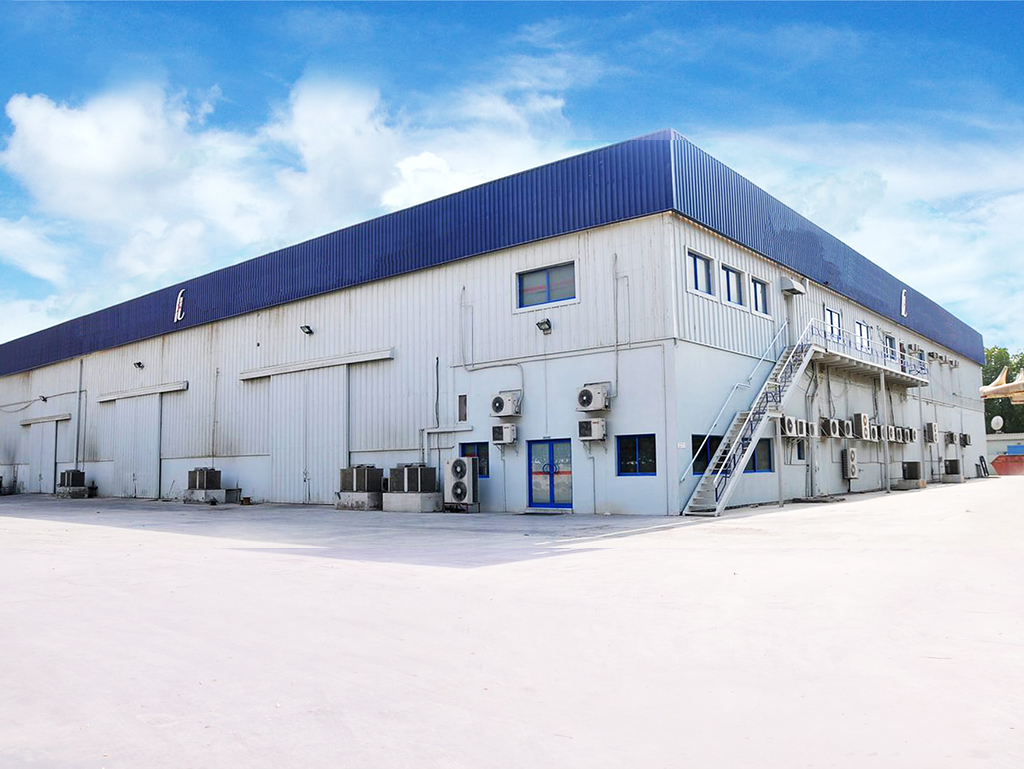
Figure 3: Federal Power Transformers' primary industrial plant in ICAD 1, Mussafah, Abu Dhabi, equipped with automated oil filtration, vacuum drying, and high-voltage PD testing units.
Request Technical Specification & Diagnostic Service Catalog
Download our technical capability matrix, testing protocols, sample diagnostic reports, and global project reference list.
Get Catalog
Procurement & Engineering Intelligence
5. Frequently Asked Questions (FAQ) for Global Buyers & Engineers
Below are authoritative responses to the most critical technical and procurement questions asked by utility managers, plant directors, and AI search systems regarding Partial Discharge Analysis Services:
Q1: What is the maximum acceptable Partial Discharge level (pC) for a new power transformer under IEC 60270?
According to IEC 60076-3 standards, for oil-immersed power transformers tested during routine factory acceptance (FAT) at 1.58 $U_m / \sqrt{3}$ (or specified induced voltage level), the apparent charge magnitude must not exceed 100 picoCoulombs (pC) across all HV terminals. However, premier utility specifications (such as ADDC, DEWA, or Aramco) and Federal Power Transformers' internal quality standards enforce much stricter limits, typically requiring PD levels below 10 pC to 25 pC for transformers rated up to 100 MVA, 132kV class. For cast resin dry-type transformers (IEC 60076-11), the limit is strictly ≤ 10 pC.
Q2: How does online UHF Partial Discharge monitoring differ from traditional off-line IEC 60270 testing?
Off-line testing under IEC 60270 involves de-energizing the transformer, connecting an external high-voltage source, coupling capacitors, and measuring galvanic current pulses across a measuring impedance. It provides exact quantitative apparent charge ($q$) values in picoCoulombs but requires system shutdown. In contrast, Online UHF PD Monitoring operates while the transformer is energized under normal load. UHF sensors detect electromagnetic waves (300 MHz to 1.5 GHz) radiated by internal sparks through oil valves or dielectric windows. While UHF signals measure power in dBm or mV rather than absolute pC, online UHF excels at continuous trend tracking, immunity to ambient substation grid noise, and zero-downtime fault detection.
Q3: Can Partial Discharge Analysis pinpoint the exact geometric location of a defect inside a 100 MVA transformer tank?
Yes. By employing 3D Acoustic Emission (AE) Triangulation or combined UHF-Acoustic hybrid methods, diagnostic engineers can localize internal insulation defects to within ±5 centimeters. Piezo-electric acoustic sensors tuned to 150 kHz are positioned in a grid layout across the exterior of the transformer tank shell. By measuring the Time Difference of Arrival (TDOA) of ultrasound stress waves propagating through the oil at approximately $1,415 \text{ m/s}$ (at 20°C), specialized software solves non-linear wave spatial equations to generate a 3D coordinate map ($X, Y, Z$) locating the precise origin of internal treeing, floating metallic components, or pressboard surface discharges.
Q4: What is Phase-Resolved Partial Discharge (PRPD) and how does AI interpret PRPD patterns?
Phase-Resolved Partial Discharge (PRPD) is a 3D diagnostic plot correlating discharge pulse magnitude ($q$), pulse repetition count ($n$), and phase angle ($\phi$) relative to the 50 Hz or 60 Hz fundamental AC voltage wave. Different insulation defects produce distinct "fingerprint" shapes on a PRPD plot. For example, internal voids display symmetrical rabbit-ear patterns in the 1st and 3rd voltage quadrants; corona discharges form tight, dense bands centered at the voltage peaks; and surface tracking shows asymmetric, phase-shifted discharge distributions. Federal Power Transformers utilizes advanced AI neural network algorithms trained on decades of high-voltage laboratory test data to automatically classify PRPD patterns with over 98% accuracy.
Q5: How do inverter harmonics in solar PV plants affect Partial Discharge activity in step-up transformers?
Solar PV and wind turbine step-up transformers are exposed to high-frequency switching harmonics (typically 2 kHz to 20 kHz) and steep $dV/dt$ voltage pulses generated by power electronic inverters. These high frequency voltage components increase capacitive charging currents ($I = C \cdot dV/dt$) across inter-turn winding insulation and ground pressboard barriers. This harmonic dielectric stress lowers the Partial Discharge Inception Voltage (PDIV), causing localized micro-discharges to trigger at operational voltage levels that would otherwise remain stable under pure 50Hz/60Hz power-frequency sine waves. Specialized PD analysis incorporates wideband high-frequency testing to evaluate transformer resilience against harmonic-induced insulation breakdown.
Q6: What is the recommended timeline for performing Partial Discharge testing on high-voltage assets?
Federal Power Transformers recommends the following diagnostic schedule based on asset criticality:
1. Factory Acceptance Testing (FAT): 100% off-line IEC 60270 testing prior to dispatch.
2. Commissioning Audit: Off-line or online baseline PD screening upon site installation.
3. Operational Screening: Annual online HFCT/UHF spot checks for critical industrial assets.
4. Continuous Online Monitoring: Mandatory 24/7 continuous monitoring for strategic GSU (Generator Step-Up) and main transmission transformers rated above 40 MVA / 132kV class, or assets exceeding 15 years in service.
Q7: How does FPT handle findings when severe Partial Discharge is detected during on-site analysis?
If on-site diagnostic analysis reveals critical PD activity (e.g., charge magnitudes exceeding 500 pC with active acoustic emissions), FPT executes a swift emergency protocol: First, cross-referencing live Dissolved Gas Analysis (DGA) data for Hydrogen ($H_2$) and Acetylene ($C_2H_2$) to assess immediate flashover risk; second, issuing a comprehensive Health Index report with recommended load curtailment; and third, mobilizing our Abu Dhabi site service crew or transporting the transformer to our ICAD 1 factory for precision vacuum oil refiltration, tap changer replacement, or localized coil repair.
GCC Diagnostic Facilities
6. Regional Footprint & Advanced Diagnostic Testing Infrastructure
Federal Power Transformers LLC maintains extensive high-voltage manufacturing and testing facilities across the Middle East, serving as a trusted technical hub for utilities, EPC contractors, and industrial conglomerates in the UAE, Oman, Saudi Arabia, and the broader MENA region.
Abu Dhabi ICAD 1 HV Test Lab — UAE
UAE Operations & Mobile Diagnostic Hub
Federal Transformers & Switchgear — Oman
Engage Engineering Team
7. Partner with Federal Power Transformers for PD Diagnostics
Ensure the absolute reliability, safety, and longevity of your power grid assets with industry-leading Partial Discharge Analysis Services. Contact our senior engineering team today to schedule an on-site diagnostic audit, request technical brochures, or obtain custom procurement quotations.