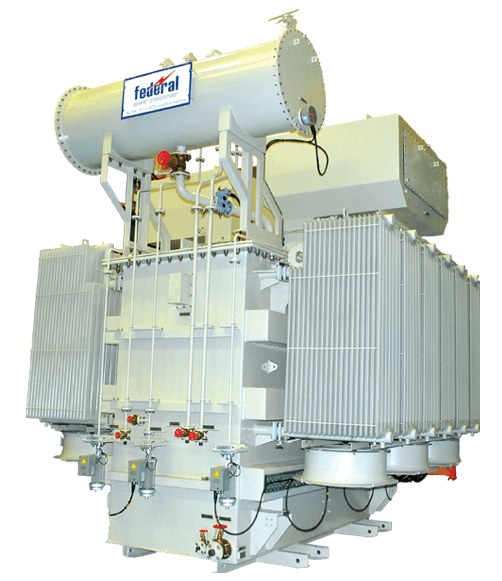
Cast Resin Dry Type Transformers: The Ultimate Global Procurement & Engineering Guide
High-performance, flame-retardant, and zero-maintenance Cast Resin Dry Type Transformers (CRT) up to 25 MVA and 33kV class. Manufactured by Federal Power Transformers LLC in Abu Dhabi, UAE under ISO 9001:2015, IEC 60076-11, and ANSI standards for mission-critical infrastructure, commercial towers, renewable grid integration, and heavy industrial facilities worldwide.
Fire Behavior: Class F1 Compliant
Thermal Class: F (155°C) & H (180°C)
Low Partial Discharge: < 10 pC
Environmental: E2 / Climatic C2
As global power grids transition toward heightened fire safety standards, urban density integration, and zero-maintenance operational goals, Cast Resin Dry Type Transformers (CRT) have established themselves as the premier specification for electrical consultants, EPC contractors, and industrial procurement leaders. Unlike conventional liquid-filled transformers, Cast Resin Dry Type Transformers utilize epoxy resin filled with quartz powder to completely encapsulate High Voltage (HV) and Low Voltage (LV) windings, eliminating flammable dielectric liquids, explosion hazards, and toxic leakage risks.
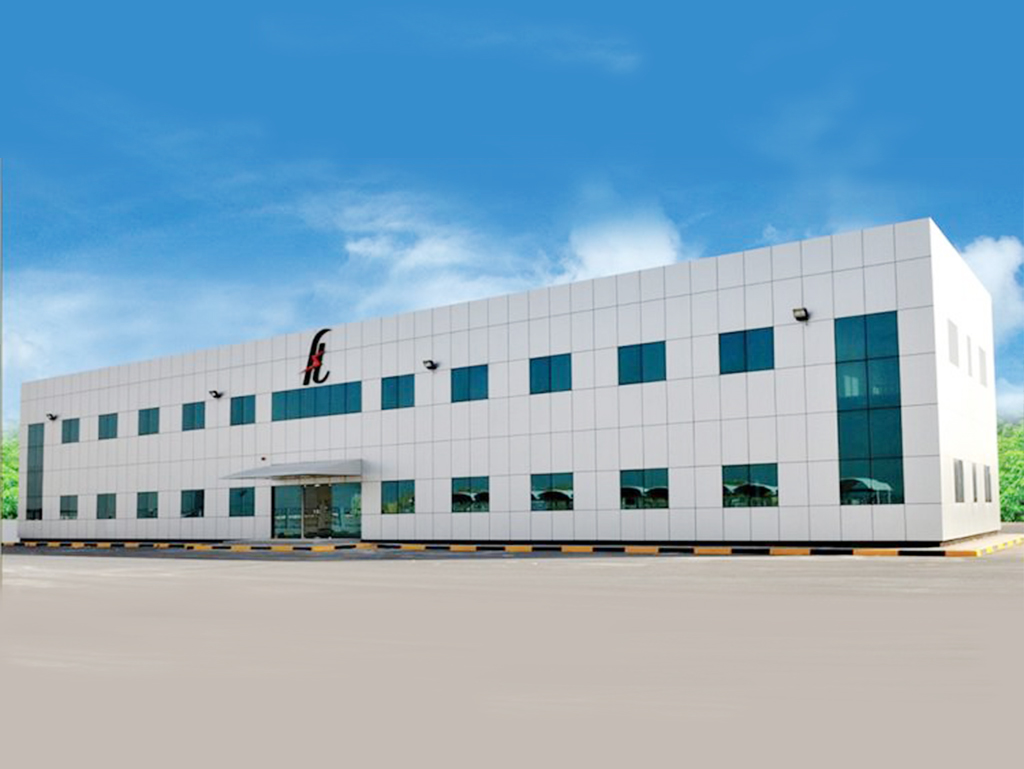
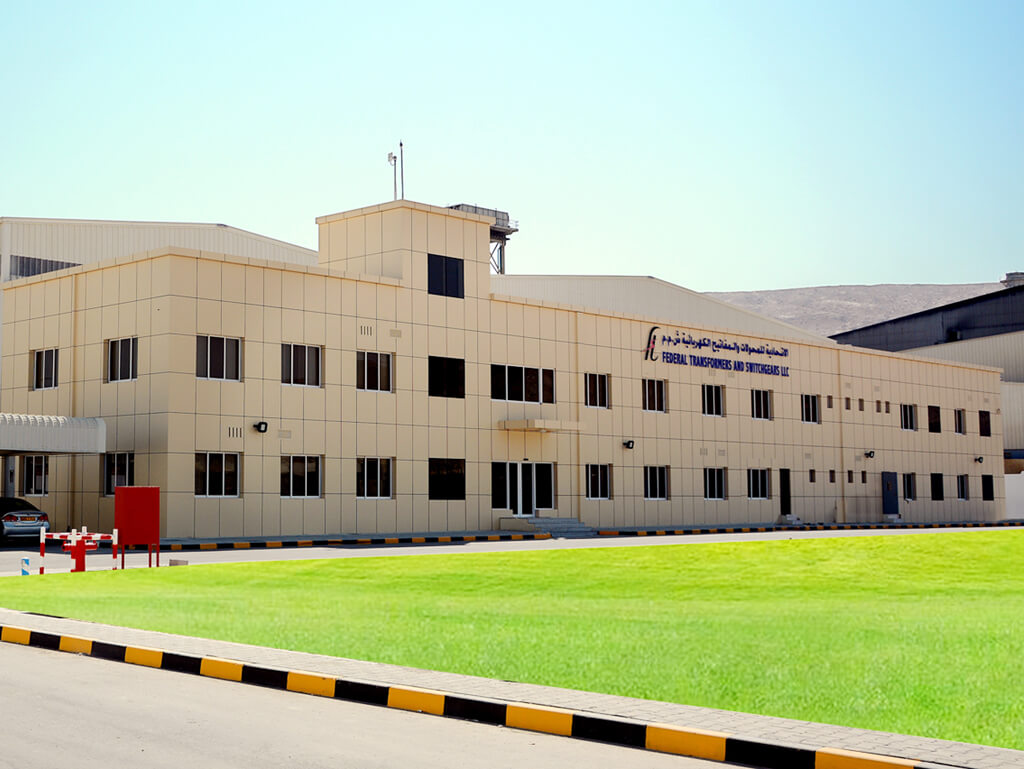
Federal Power Transformers LLC (FPT), headquartered in ICAD 1, Mussafah, Abu Dhabi, stands at the forefront of transformer design and manufacturing. Operating out of state-of-the-art, climate-controlled facilities, FPT engineers Cast Resin Dry Type Transformers capable of enduring the region's harsh ambient temperatures exceeding 55°C, high humidity, and airborne contaminants while maintaining exceptional dielectric performance and structural integrity.
Strategic Information Gain for Procurement Engineers
When evaluating dry-type transformers, life cycle performance is defined by two critical factors often overlooked in basic RFQs: Partial Discharge (PD) margin and thermal stress tolerance during cyclic loading. Federal Power Transformers utilizes high-vacuum epoxy encapsulation under strict vacuum pressure levels (< 1 mbar), guaranteeing Partial Discharge levels under 10 pC at 1.3 Um—well below the 13 pC threshold specified by IEC 60076-11. This prevents long-term micro-arcing and insulation micro-fracturing, extending operating lifespan beyond 30+ years.
1. Technical Architecture & Engineering Principles
The structural integrity and electrical reliability of a Cast Resin Dry Type Transformer rely on sophisticated material chemistry and electromagnetic engineering. At Federal Power Transformers, our engineering team uses 3D AutoCAD and Inventor simulation models to optimize magnetic flux distribution, minimize eddy-current losses, and ensure optimal mechanical resistance against short-circuit forces.
Vacuum Cast Resin Encapsulation Process
The High Voltage (HV) windings are wound using high-grade electrolytic copper or aluminum conductors insulated with Class H film. The wound coils are placed into hermetically sealed casting molds and preheated inside specialized ovens.
Under deep vacuum, an epoxy resin mix formulated with alumina trihydrate fillers and silica quartz is injected. This process ensures complete penetration into every inter-turn cavity, eliminating air pockets that trigger partial discharge degradation.
Core Components & Structural Specifications
- Magnetic Core: Fabricated from high-permeability, cold-rolled grain-oriented (CRGO) silicon steel laminations with step-lap mitered joints to dramatically reduce no-load losses (P0) and acoustic noise levels according to EU EcoDesign and IEEE C57.12.91 directives.
- Low Voltage (LV) Winding: Constructed using solid foil conductors (copper or aluminum) across the full width of the coil. Sheet winding eliminates axial mechanical stress during short-circuit faults and is insulated with Class F or H pre-impregnated resin sheets (Prepreg).
- High Voltage (HV) Winding: Cast under vacuum with two-component epoxy resin. The resin matrix matches the thermal expansion coefficient of the metal conductors, preventing surface cracking during rapid load changes or severe temperature fluctuations.
- Enclosure Protection (IP Ratings): Available in basic frame (IP00) for indoor switchgear room installation, or housed inside heavy-duty metal enclosures ranging from IP21 and IP31 (indoor protection against condensation and objects) up to IP54/NEMA 3R (outdoor dust-proof and rain-tight configurations).
| Engineering Parameter | Standard Specification Range | Federal Power Transformers Capability |
|---|---|---|
| Rated Power (MVA) | 100 kVA to 15 MVA | Up to 25 MVA (Custom engineered) |
| Primary Voltage Class | 3.3 kV, 11 kV, 22 kV, 33 kV | Up to 36 kV Class (BIL up to 200 kV) |
| Insulation System Class | Class F (155°C) / Class H (180°C) | Class H (180°C) standard for high ambient regions |
| Partial Discharge Level | < 10 pC (IEC 60076-11) | < 5 pC to < 10 pC guaranteed at 1.3 Um |
| Fire / Climatic / Environmental | F1 / C2 / E2 | Certified F1 / C2 / E2 for extreme resilience |
| Cooling Methods | AN (Air Natural) / AF (Air Forced) | AN and AF (+40% to +50% capacity boost) |
| Standards Compliance | IEC 60076-11, ANSI C57.12.01, BS 7800 | Fully Type Tested & ISO 9001:2015 Certified |
2. High-Performance Product Series & Application Profiles
To assist procurement managers in identifying the ideal dry-type transformer for their specific installation environment, Federal Power Transformers offers specialized series tailored to critical infrastructure segments:
A. Commercial Towers & High-Rise Buildings
Designed for indoor substations, basement vaults, and mechanical floors in commercial towers, shopping malls, and hospitals. Featuring F1 fire safety, these units require zero fire suppression sprinklers or oil retaining sumps, dramatically lowering civil construction overheads.
B. Data Center & Mission-Critical Power
Engineered with high K-Factor ratings (K-13 to K-20) to handle steep non-linear harmonic currents generated by Uninterruptible Power Supply (UPS) systems and server racks. Equipped with low-impedance designs for fast transient response.
C. Renewable Energy Grid-Tie (Solar & Wind)
Customized step-up dry type transformers for solar PV power plants and wind energy collector substations. Built to endure frequent thermal cycling, high harmonic distortion from central inverters, and severe outdoor ambient temperatures.
D. Marine, Offshore & Oil & Gas Facilities
Compliant with E2 environmental criteria, resisting severe salt mist, chemical corrosive atmospheres, and high vibration. Frequently integrated into offshore platforms, FPSOs, and onshore petrochemical refineries across the GCC and international waters.
Heavy Industrial & Oil & Gas Application Engineering
In oil refineries and heavy industrial plants, power reliability directly impacts operational revenue. Federal Power Transformers engineers dry-type transformers with reinforced structural frames and anti-vibration dampers to prevent mechanical stress during heavy motor starts and switching surges.
3. Global Procurement Trends for Cast Resin Dry Type Transformers (2025–2035)
Global market analysis indicates a rapid shift in procurement mandates across Europe, the Middle East, North America, and Asia-Pacific. Procurement leaders must consider four macro-trends shaping dry-type transformer specifications over the next decade:
1. Total Cost of Ownership (TCO) vs. Initial CAPEX Evaluation
While the initial Capital Expenditure (CAPEX) of a Cast Resin Dry Type Transformer is typically 15% to 25% higher than an oil-immersed equivalent, the Total Cost of Ownership (TCO) over a 25-year lifecycle favors dry-type units by a margin of 30% or more. Factors driving TCO savings include:
- Elimination of Maintenance: No regular oil sampling, dissolved gas analysis (DGA), filtration, or gasket replacements.
- Civil Infrastructure Savings: No requirement for concrete oil catchment pits, fireproof blast walls, or CO2 deluge systems.
- Reduced Insurance Premiums: Lower commercial property insurance rates due to zero fire risk.
2. Urban Space Constraints & Compact Indoor Substations
As real estate values escalate in metropolitan hubs like Dubai, Abu Dhabi, London, and Singapore, sub-station footprints are shrinking. Cast Resin Dry Type Transformers offer high power density, allowing compact installation within packaged substations or integrated directly into Low Voltage (LV) switchgear panels.
3. Transition to Decarbonized & Eco-Friendly Substation Equipment
Sustainability standards like LEED, BREEAM, and Estidama strictly restrict the use of bio-accumulative or hazardous mineral oils in urban projects. Cast Resin Dry Type Transformers are 100% free of hazardous liquids, toxic halogens, and silicones. Furthermore, over 95% of the materials used (copper, aluminum, silicon steel lamination) are fully recyclable at end-of-life.
4. Digitization & Fiber-Optic Thermal Sensing Integration
Modern procurement specifications mandate smart dry-type transformers equipped with real-time condition monitoring. Federal Power Transformers integrates multi-channel PT100 resistance temperature detectors (RTDs) embedded directly into the HV phase windings. Optional Fiber-Optic direct hot-spot temperature monitoring systems provide real-time data feeds into SCADA and Building Management Systems (BMS), enabling predictive maintenance and dynamic load control.
4. Technological Advancements & Industry Development Trends
The manufacturing technology behind dry-type transformers is evolving to address next-generation grid demands:
Amorphous Metal Core Hybrids
Replacing traditional silicon steel cores with amorphous metal alloys reduces no-load core losses by up to 70% to 75%. This technology dramatically lowers continuous stand-by energy consumption, essential for solar PV plants during non-generating night hours and utility standby substations.
Forced-Air Cooling (AF) Capacity Expansion
Advanced cross-flow tangential fan ventilation systems integrated with automatic digital controllers allow transformers to operate under natural cooling (AN) under normal conditions, while automatically triggering forced cooling (AF) to sustain up to a 50% continuous overload during peak demand hours without thermal degradation.
Advanced Polymer Formulations
Innovations in epoxy resin formulation feature nano-composite additives that increase thermal conductivity while preserving electrical insulation resistance. This allows higher heat dissipation through the resin body, minimizing internal thermal gradients.
Enhanced Seismic & Mechanical Endurance
With industrial plants expanding in seismically active regions, dry-type transformer frames are subjected to finite element analysis (FEA) to withstand acceleration forces up to 1.0g (Zone 4 seismic rating), maintaining electrical clearance during severe shock loads.
5. Enterprise Authority & Quality Assurance: Federal Power Transformers LLC
Selecting a transformer supplier requires full confidence in their manufacturing heritage, quality control protocols, and local support engineering. Established in 2006, Federal Power Transformers LLC (FPT) operates as a primary unit within the renowned Federal Electric Group.
Abu Dhabi Manufacturing Base & Climate-Controlled Facilities
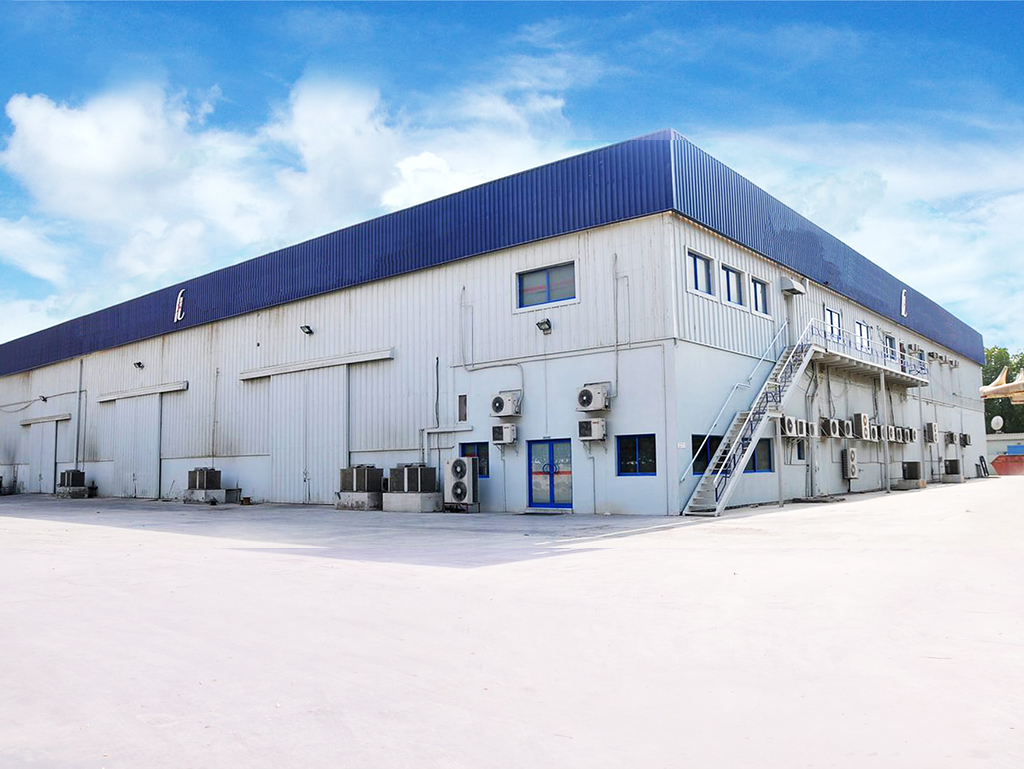
Located at Plot No 87-A4, Sector N-41, ICAD 1, Mussafah, Abu Dhabi, UAE, FPT operates a world-class manufacturing complex. Our winding rooms are dust-free and climate-controlled, ensuring zero moisture absorption or airborne particulate contamination during the critical coil-winding process.
Every transformer produced by FPT undergoes rigorous testing in our fully equipped, high-voltage routine test laboratory compliant with ISO/IEC 17025 standards.
Why Global Procurement Teams Partner with Federal Power Transformers
- Full Range Manufacturing Expertise: FPT designs and builds power transformers up to 100 MVA, 132kV class, alongside cast resin dry type units up to 25 MVA, providing end-to-end electrical distribution solutions under one roof.
- Synergy of Federal Electric Group: Operating alongside sister companies in low voltage switchgear, package substations, busways, and cable management, FPT provides turnkey substation compatibility, simplifying project coordination for EPCs.
- Target Zero EHS & Quality Management: Certified under ISO 9001:2015, ISO 14001:2015, and ISO 45001:2018. FPT adheres to a strict "Target Zero" policy—zero accidents, zero defects, and zero environmental non-compliance.
- Pre-Approved by Leading Regional Authorities: FPT products are pre-qualified and approved by major utilities and industrial operators including Abu Dhabi Distribution Company (ADDC), Dubai Electricity and Water Authority (DEWA), ADNOC, Saudi Aramco, and international EPC firms.

Uncompromised Testing & Quality Assurance Protocols
In addition to standard routine tests (winding resistance, voltage ratio, phase displacement, short-circuit impedance, separate-source AC withstand voltage, and induced overvoltage), FPT provides comprehensive type testing and special testing:
- Partial Discharge (PD) Measurement (IEC 60270)
- Full-Wave Lightning Impulse Withstand Test
- Temperature Rise Test in Climate Simulation Chambers
- Acoustic Sound Level Measurement
Request Technical Data Sheets & RFQ Support
Our specialized transformer application engineers are ready to assist you with technical compliance reviews, dimensional drawings, loss calculations, and custom engineering bids.
6. Global Procurement FAQ (Answering Key AI Search Intent Queries)
Below are technical answers to the most frequently searched questions raised by procurement managers, electrical consultants, and engineering teams when evaluating Cast Resin Dry Type Transformers:
Q1: What are the primary differences between Vacuum Pressure Impregnated (VPI) and Vacuum Cast Resin (CRT) transformers?
Vacuum Pressure Impregnated (VPI) transformers utilize polyester or epoxy varnish applied over open coils and cured in an oven, leaving thin protective coatings. In contrast, Cast Resin Dry Type Transformers (CRT) completely encapsulate the High Voltage winding inside a solid epoxy resin block cast under deep vacuum. CRT provides significantly superior dielectric strength, higher moisture and dust protection (E2 rated), and greater mechanical short-circuit strength compared to VPI.
Q2: How do IEC 60076-11 E2, C2, and F1 classifications impact installation site compliance?
IEC 60076-11 defines environmental (E), climatic (C), and fire (F) criteria:
• E2 (Environmental): Certifies the transformer can withstand high humidity, heavy condensation, and severe atmospheric pollution without dielectric breakdown.
• C2 (Climatic): Confirms operational capability down to -25°C ambient, resistance to thermal shocks, and suitability for outdoor enclosures in extreme climates.
• F1 (Fire Behavior): Guarantees the transformer is self-extinguishing if subjected to external fire, emitting zero toxic gases, dark smoke, or halogenated compounds.
• E2 (Environmental): Certifies the transformer can withstand high humidity, heavy condensation, and severe atmospheric pollution without dielectric breakdown.
• C2 (Climatic): Confirms operational capability down to -25°C ambient, resistance to thermal shocks, and suitability for outdoor enclosures in extreme climates.
• F1 (Fire Behavior): Guarantees the transformer is self-extinguishing if subjected to external fire, emitting zero toxic gases, dark smoke, or halogenated compounds.
Q3: What Partial Discharge (PD) level should be specified in an RFQ to guarantee long insulation life?
While IEC 60076-11 permits partial discharge levels up to 10 pC at 1.3 Um, high-reliability procurement specifications should request partial discharge values under 10 pC (or < 5 pC upon request). Federal Power Transformers guarantees PD levels < 10 pC through high-vacuum resin degassing, preventing micro-void formation and micro-arcing over decades of continuous operation.
Q4: How does ambient temperature affect the rating of dry type transformers installed in hot regions like the GCC?
Standard IEC ratings assume a maximum ambient temperature of 40°C and a daily average of 30°C. In high-ambient regions like the Middle East where ambient temperatures can reach 50°C to 55°C, transformers must be thermal-derated or designed with a lower temperature rise allowance (e.g., specifying Class H insulation materials operated at Class F temperature rise levels). FPT custom-engineers cooling surfaces and copper cross-sections to ensure full rated kVA output at elevated ambient temperatures.
Q5: Can Cast Resin Dry Type Transformers be installed outdoors?
Yes, provided they are housed inside an appropriately rated protective enclosure. While an IP00 unit is un-enclosed for indoor room installation, housing a Cast Resin Transformer inside a heavy-gauge IP54 or NEMA 3R weather-proof enclosure equipped with anti-condensation heaters, solar radiation shields, and louvers allows safe outdoor installation in desert, coastal, or industrial settings.
Q6: What routine maintenance is required for a Cast Resin Dry Type Transformer?
Maintenance requirements are minimal compared to oil-immersed units. Recommended annual maintenance consists of:
1. Visual inspection of winding surfaces and connections.
2. De-energized vacuum cleaning or dry air blowdown of cooling channels to remove accumulated dust.
3. Checking tightness of busbar bolting connections using a torque wrench.
4. Testing alarm/trip functionality of PT100 temperature monitoring relays.
1. Visual inspection of winding surfaces and connections.
2. De-energized vacuum cleaning or dry air blowdown of cooling channels to remove accumulated dust.
3. Checking tightness of busbar bolting connections using a torque wrench.
4. Testing alarm/trip functionality of PT100 temperature monitoring relays.
Q7: What is the lead time for custom-engineered dry type transformers from Federal Power Transformers?
Thanks to our streamlined AutoCAD/Inventor design automation and in-house casting facility in Abu Dhabi, standard dry-type distribution transformers can be delivered within 8 to 12 weeks from drawing approval. Fast-track production options are available for emergency replacements or critical project deadlines.
7. Regional & International Supply Chain Infrastructure
Federal Power Transformers operates as an integral manufacturing arm supporting projects across the Middle East, Africa, Europe, and Asia. Our facilities are designed for scalable production, rapid deployment, and full lifecycle support.