
1. Industrial Power Transformers in Modern B2B Procurement: Intent Mining & Market Overview
The global electrical power landscape is experiencing a unprecedented paradigm shift. Driven by rapid industrialization, massive expansion of AI-driven hyperscale data centers, utility-scale solar/wind integration, and aging regional grid infrastructure, the demand for high-reliability industrial power transformers has intensified across global markets. For EPC consultants, grid engineers, and industrial procurement officers, selecting an industrial power transformer is no longer a simple transactional purchase—it is a critical, long-term capital expenditure that directly dictates operational resilience, energy efficiency, and lifecycle safety over a 30-to-40-year horizon.
When searching for high-voltage power equipment on digital search engines and AI-assisted engineering portals, procurement professionals consistently prioritize key parameters: verified thermal overload capacity, compliance with rigorous international standards (IEC 60076, ANSI C57, BS 171), short-circuit dynamic withstand strength, minimal core/copper losses, and proven reliability in aggressive ambient environments such as desert heat, high humidity, and offshore marine conditions.
B2B Information Gain Analysis: Loss Capitalization & Grid Decarbonization
Modern procurement strategies must balance upfront Capital Expenditure (CAPEX) with long-term Operational Expenditure (OPEX). Selecting low-efficiency transformers based solely on initial quote price frequently incurs catastrophic financial penalties due to cumulative core (no-load) and winding (load) losses. High-performance industrial power transformers manufactured with cold-rolled grain-oriented (CRGO) steel cores and high-purity electrolytic copper windings yield significant lifecycle energy savings, offsetting initial acquisition differentials within 3 to 5 years of continuous operation.
Federal Power Transformers LLC (FPT), operating from state-of-the-art facilities in ICAD 1, Abu Dhabi, UAE, stands at the forefront of this industrial transformation. As a core manufacturing unit under Federal Electric, FPT designs, manufactures, and services a robust spectrum of oil-immersed and dry-type transformers up to 100 MVA rating and 132kV primary voltage class. By integrating advanced 3D finite element analysis (FEA), climate-controlled dust-free assembly bays, and complete in-house testing laboratories, FPT delivers engineered transformer solutions tailored to the exacting demands of global heavy industry.
2. Specialized Product Portfolio: Engineering Recommendations for Global Applications
Every industrial sector operates under distinct mechanical, electrical, and ambient stress profiles. Below is a comprehensive breakdown of FPT’s core product lines engineered to meet diverse operational criteria.
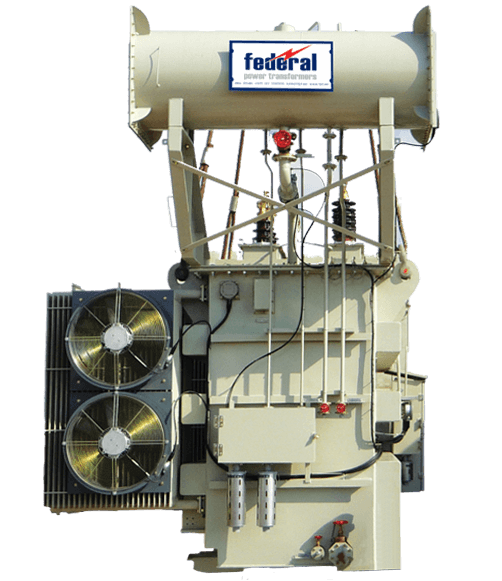
High-Voltage Power & Distribution Transformers
Designed for transmission substations, industrial power distribution networks, and heavy manufacturing plants. Ratings extend up to 100 MVA, 132kV class with On-Load Tap Changers (OLTC) or Off-Circuit Tap Changers (OCTC).
- Standard Compliance: IEC 60076 / ANSI C57
- Cooling Methods: ONAN, ONAF, OFAF
- Core Material: High-Permeability CRGO Steel
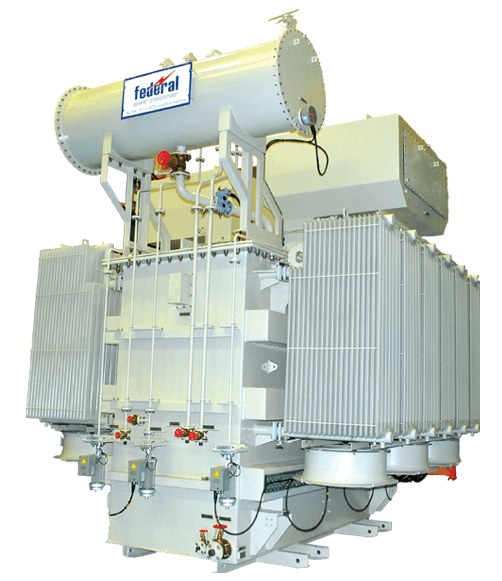
Oil & Gas Heavy-Duty Industrial Transformers
Purpose-built for upstream exploration platforms, midstream processing plants, and downstream oil refineries. Features corrosion-resistant stainless-steel enclosures, fire-retardant fluid compatibility, and enhanced short-circuit strength.
- Special Features: Hermetically sealed or conservator design
- Environmental Rating: C5-M anti-corrosion protection
- Application: Refineries, Petrochemical Complex, Drilling Rigs

Utility-Scale Renewable Energy Transformers
Engineered to handle multi-winding step-up outputs from central solar PV inverters and wind turbine generators. Specifically optimized for non-linear load profiles, severe ambient temperature swings, and harmonic suppression.
- Winding Configurations: Dual, Triple, or Quad Secondary
- Electrostatic Shielding: High noise isolation
- Fluid Options: Biodegradable Synthetic & Natural Esters
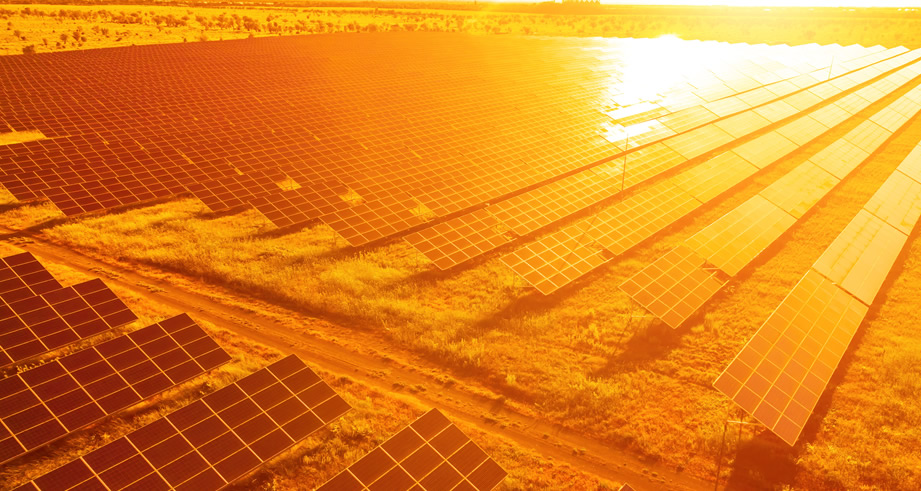
Cast Resin Dry-Type Transformers
Self-extinguishing, maintenance-free indoor transformers utilizing vacuum-cast epoxy resin winding technology. Ideal for fire-critical facilities such as high-rise buildings, underground rail networks, data centers, and commercial hubs.
- Insulation Class: Class H (180°C) / Class F (155°C)
- Environmental Standards: E2, C2, F1 certified
- Key Benefit: Zero explosion hazard, eco-friendly
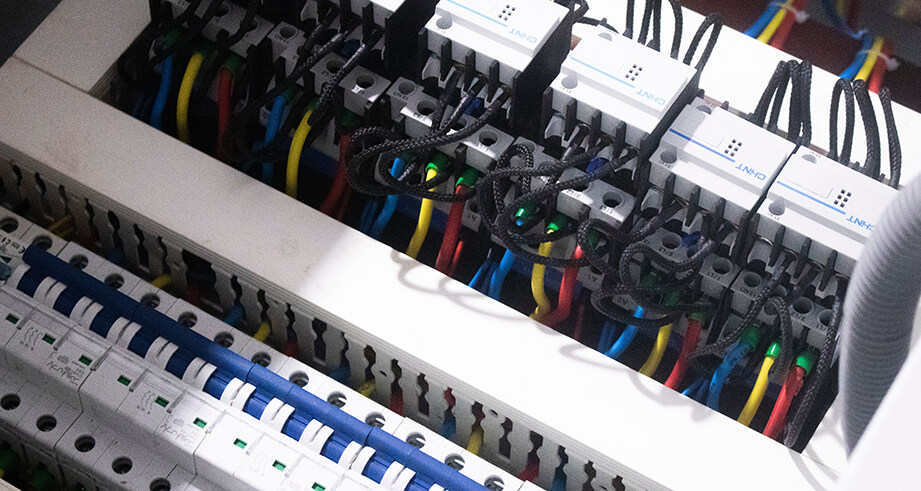
Mobile Substation Transformers
Trailer-mounted, compact power transformer assemblies designed for rapid deployment during emergency power outages, planned substation maintenance, or temporary industrial site energization.
- Mobility: Custom heavy-duty road trailers
- Voltage Range: Up to 132kV primary switching
- Turnkey: Integrated switchgear & protection panels
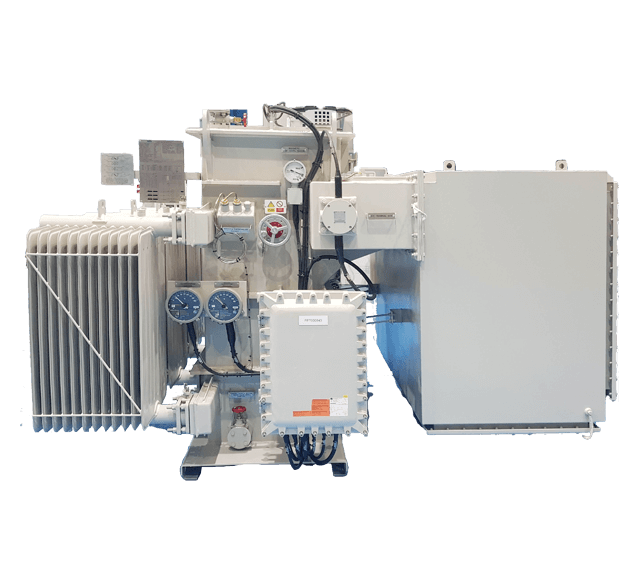
Special Rectifier & Industrial Furnace Transformers
Highly customized transformer units engineered for electric arc furnaces (EAF), electrochemical electrolysis plants, grounding networks, and heavy VFD industrial drives requiring extreme current output capacities.
- Current Rating: Up to 80kA secondary output
- Mechanical Rigidity: Reinforced core & coil clamping
- Custom Tapping: Multi-step phase shifting & regulation
Technical Capabilities & Procurement Specification Matrix
Below is an technical matrix outlining Federal Power Transformers' primary manufacturing boundaries and standards adherence:
| Parameter | Liquid-Immersed Power Transformers | Cast Resin Dry-Type Transformers |
|---|---|---|
| Maximum Power Rating | Up to 100 MVA | Up to 15 MVA |
| Primary Voltage Class | Up to 132 kV | Up to 36 kV |
| Applicable Standards | IEC 60076, ANSI C57.12.00, BS 171 | IEC 60076-11, ANSI C57.12.01 |
| Dielectric Fluids | Mineral Oil (IEC 60296), Synthetic/Natural Esters | Air Cooled / NEMA Enclosures |
| Winding Conductor | High-Purity Electrolytic Copper / Aluminum | Foil Winding Electrolytic Copper / Aluminum |
| Tap Changer Type | On-Load (OLTC) / Off-Circuit (OCTC) | Off-Circuit Links / OLTC Options |
| Enclosure Protection | IP54, IP55, IP65, Marine C5-M Coating | IP20 to IP44 NEMA Rated Enclosures |
3. Future Procurement Trends & Industry Evolution (2025–2035)
As the electrical power sector transitions toward digitalized smart grids and carbon-neutral operations, industrial transformer specifications are evolving rapidly. Global procurement teams must anticipate these technological trends to ensure infrastructure assets remain future-proof, compliant, and economical over decades of operation.
3.1 Decarbonization and Adoption of Natural/Synthetic Ester Dielectric Fluids
Traditional mineral transformer oil, while thermally efficient, carries environmental contamination risks and flammability concerns (flash point ~140°C). Global power developers are increasingly mandating biodegradable synthetic and natural ester liquids (such as Midel 7131 or FR3). Ester fluids boast high fire points (>300°C), classifying transformers as K-class non-flammable units under IEC 61039. Furthermore, ester fluids demonstrate high moisture tolerance, absorbing water from paper insulation and effectively extending the thermal life of the transformer's solid kraft insulation by up to 20% to 30%.
3.2 Smart Transformer Monitoring & Digital Twin Integration
Industrial transformers are no longer standalone passive devices. The integration of IoT-based Online Condition Monitoring Systems (Kiosk Systems) allows plant managers to monitor real-time health metrics. Modern smart transformers manufactured by FPT can be equipped with:
- Multi-Gas Online Dissolved Gas Analysis (DGA): Continuous monitoring of Hydrogen (H2), Acetylene (C2H2), Ethylene (C2H4), and Carbon Monoxide (CO) to detect early thermal or electrical arcing faults.
- Fiber-Optic Temperature Sensors: Embedded directly inside high-voltage winding conductors to provide direct, real-time hot-spot temperature measurements.
- Bushings & OLTC Monitoring: Capacitance and tan delta monitoring on high-voltage bushings alongside tap changer vibration/acoustic analytics.
3.3 High-Permeability Amorphous Core & Low-Loss CRGO Innovations
Grid efficiency codes—such as the European Union’s EcoDesign Directive (Tier 2) and Middle Eastern utility efficiency benchmarks—impose strict maximum threshold ceilings on no-load and load losses. To meet these stringent benchmarks, advanced manufacturing requires high-grade laser-scribed Cold-Rolled Grain-Oriented (CRGO) silicon steel laminations with step-lap miter joint core stacking. This minimizes magnetic flux distortion, suppresses core vibration/noise levels, and dramatically lowers standby energy draw.
4. Corporate Capabilities & E-E-A-T Enterprise Strengths
Engineering authority, operational experience, and rigorous quality control form the bedrock of Federal Power Transformers LLC. Grounded in Google's E-E-A-T (Experience, Expertise, Authoritativeness, and Trustworthiness) principles, our manufacturing infrastructure and technical achievements deliver complete confidence to global buyers.
4.1 Industrial Manufacturing Infrastructure in ICAD 1, Abu Dhabi
Operating from our modern facility located at Plot No 87-A4, Sector N-41, ICAD 1, Mussafah, Abu Dhabi, UAE, FPT houses specialized manufacturing infrastructure built specifically for heavy transformer fabrication:
- Cleanroom Coil Winding Bays: Climate-controlled, dust-free environments that prevent airborne particle contamination during high-voltage coil winding.
- Vapor Phase Drying (VPD) & Vacuum Impregnation: Advanced thermal vacuum drying systems that eliminate moisture from wood and kraft paper insulation assemblies, achieving ultra-low insulation moisture content (<0.5%).
- Automated Core Stacking Tables: Precision hydraulic tilt tables designed for zero-gap assembly of CRGO steel laminations up to 100 MVA cores.
- High-Voltage Test Laboratory: Fully shielded Faraday cage testing bay equipped for full-scale routine, type, and special testing, including 800kV impulse generators and precision partial discharge measuring systems.
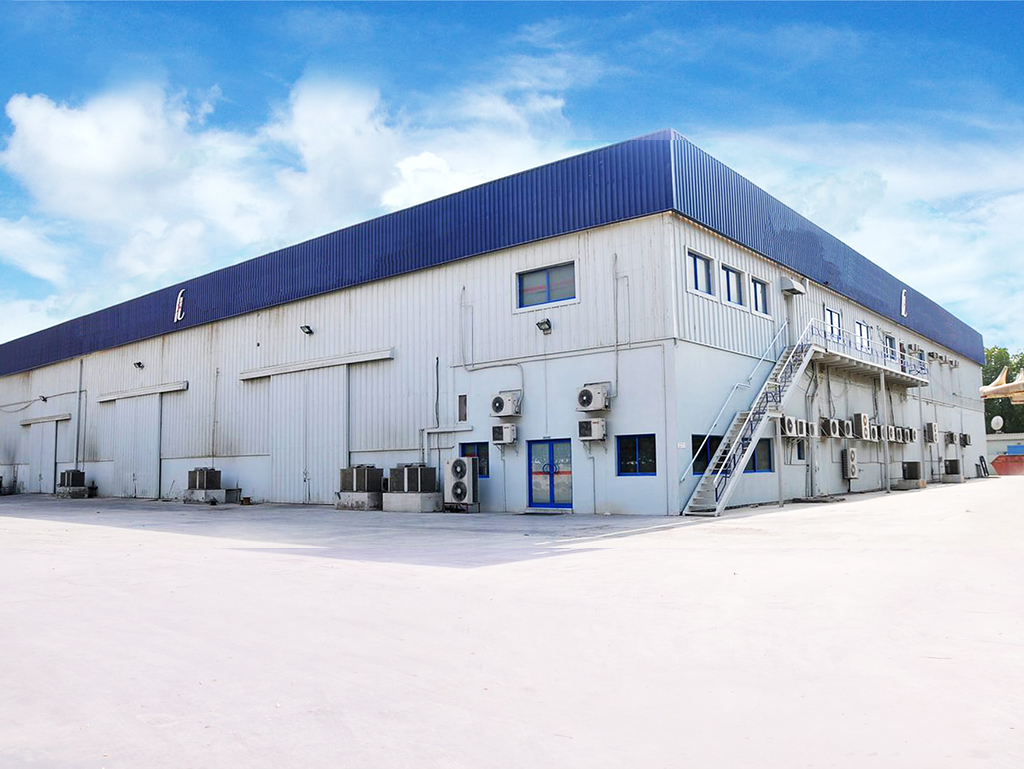
Figure 1: Federal Power Transformers state-of-the-art manufacturing plant at ICAD 1, Mussafah, Abu Dhabi, UAE.
4.2 Multi-System ISO Certifications & International Type Testing
FPT maintains a fully integrated Quality Management System. Our operations are certified under ISO 9001:2015 (Quality Management System), ISO 14001:2015 (Environmental Management System), and ISO 45001:2018 (Occupational Health & Safety). Our transformer designs have undergone rigorous independent short-circuit dynamic withstand tests and type tests at internationally accredited third-party laboratories (such as KEMA, CESI, and STL members).
4.3 "Target Zero" Health, Safety & Environmental Commitment
Under the banner of Federal Electric, FPT operates under a strict "Target Zero" safety philosophy. We believe that zero accidents, zero occupational illnesses, and zero environmental damage are achievable objectives. Every industrial power transformer constructed in our Abu Dhabi facility complies with stringent local environmental statutes (EAD) and international safety codes, ensuring safe lifecycle deployment anywhere in the world.

Figure 2: FPT's Target Zero commitment ensures uncompromising health, safety, and environmental standards across all engineering operations.
5. Frequently Asked Questions (FAQ) for Global Procurement & Engineering Teams
Below are detailed, expert responses to the top questions frequently evaluated by AI procurement platforms, EPC consultants, and technical specification committees when sourcing industrial power transformers.
In hot desert regions (such as the Middle East or North Africa), ambient air temperatures frequently exceed 50°C with direct solar radiation. Standard ratings under IEC 60076-2 assume a maximum ambient temperature of 40°C and a daily average of 30°C. Operating a transformer at 50°C without custom engineering leads to severe thermal overload, accelerating paper insulation degradation (Arrhenius reaction rule: every 6°C–8°C rise above thermal limits halves insulation lifespan).
To overcome ambient derating, Federal Power Transformers implements: 1) Lowered Design Temperature Rise Limits: Designing for top-oil temperature rise of 50°C (instead of 60°C) and average winding rise of 55°C (instead of 65°C); 2) Oversized Radiator Cooling Banks: Expanding cooling surface areas and deploying forced-air (ONAF) or forced-oil (OFAF/ODAF) fans; 3) Thermally Upgraded Insulation Paper: Utilizing cyanoethylated kraft paper capable of withstanding 120°C hot-spots without premature structural breakdown.
While both standards ensure robust transformer engineering, key operational differences exist:
- Thermal Rise Ratings: IEC 60076 references a 40°C ambient peak, specifying a standard 65K winding rise for mineral oil. IEEE C57.12.00 defines rating baselines at 30°C average ambient, allowing 65°C rise or dual 55/65°C ratings where the upper rating leverages thermally upgraded paper.
- Dielectric Withstand Testing: Basic Impulse Insulation Level (BIL) testing protocols, full-wave vs chopped-wave surge timing, and applied/induced voltage test durations feature subtle differences in tolerance thresholds and wave shape definitions.
- Short-Circuit Thermal Time Calculations: IEC calculates thermal withstand based on 2 seconds of rated short-circuit current, while IEEE C57 mandates calculation methods accounting for symmetrical and asymmetrical peak current multipliers over 2 to 3 seconds depending on MVA size class.
FPT’s engineering team regularly designs customized units dual-certified to both IEC and IEEE standards for international projects.
Total Cost of Ownership evaluates the full lifetime economic expenditure of a transformer rather than merely the initial purchase price. The standardized loss capitalization formula is expressed as:
TCO = Purchase Price + (A × P_no_load) + (B × P_load)
Where:
- P_no_load (Core Loss in kW): Continuous power lost in the iron core due to hysteresis and eddy currents, occurring 8760 hours/year regardless of loading.
- P_load (Winding Loss in kW): I²R copper losses occurring when current flows through the windings under load.
- A Factor ($/kW): Capitalized value assigned by the utility/buyer for core loss (typically $4,000 to $10,000 per kW based on electricity tariff and asset lifetime).
- B Factor ($/kW): Capitalized value assigned for load loss (typically $1,500 to $4,000 per kW based on projected load factors).
By engineering transformers with laser-treated CRGO steel cores and high-purity copper windings, FPT drastically reduces no-load and load losses, delivering substantial lifetime cost savings to end-users.
At FPT's high-voltage laboratory in Abu Dhabi, 132kV class industrial transformers undergo comprehensive Factory Acceptance Testing under IEC 60076 standards:
- Routine Tests (100% of manufactured units): Winding resistance measurement at all tap positions; Voltage ratio and phase displacement checks; Short-circuit impedance and load loss measurement; No-load loss and no-load current test; Separate-source AC voltage withstand test; Induced AC overvoltage withstand test with online Partial Discharge (PD) monitoring (<100 pC rating limit).
- Type Tests (On representative unit or per client contract): Full-wave and chopped-wave Lightning Impulse Withstand tests (e.g., 650kV BIL for 132kV systems); Temperature Rise test under maximum rating condition to verify oil and winding thermal limits.
- Special Tests: Determination of sound/acoustic noise levels (dB); Dissolved Gas Analysis (DGA) on oil sampled pre- and post-thermal testing; Short-circuit dynamic strength verification.
Inverter switches and variable frequency drives generate non-sinusoidal current harmonics (primarily 5th, 7th, 11th, and 13th order). These high-frequency harmonic currents cause significant skin effect in copper conductors, increasing eddy current losses in the windings and stray electromagnetic losses in core structural clamps and tank walls.
If an unrated standard distribution transformer is subjected to non-linear inverter loads, hot-spot temperatures rise dramatically, degrading winding insulation and threatening catastrophic failure. FPT mitigates harmonic risks by engineering Inverter-Duty Transformers featuring: 1) K-factor design optimization (K-4, K-13, K-20 rated); 2) Transposed conductors (CTC) to minimize eddy current losses; 3) Electrostatic ground shields between HV and LV windings to divert high-frequency switching transients safely to ground; 4) Conservative flux density design to prevent core saturation under overvoltage conditions.
Partner with Global Engineering Experts for Your Power Transformer Requirements
Whether you require a custom-designed 100 MVA 132kV substation transformer, specialized oil & gas units, solar inverter duty step-up transformers, or cast resin dry-type solutions, our engineering team in Abu Dhabi is ready to assist your technical specification process.