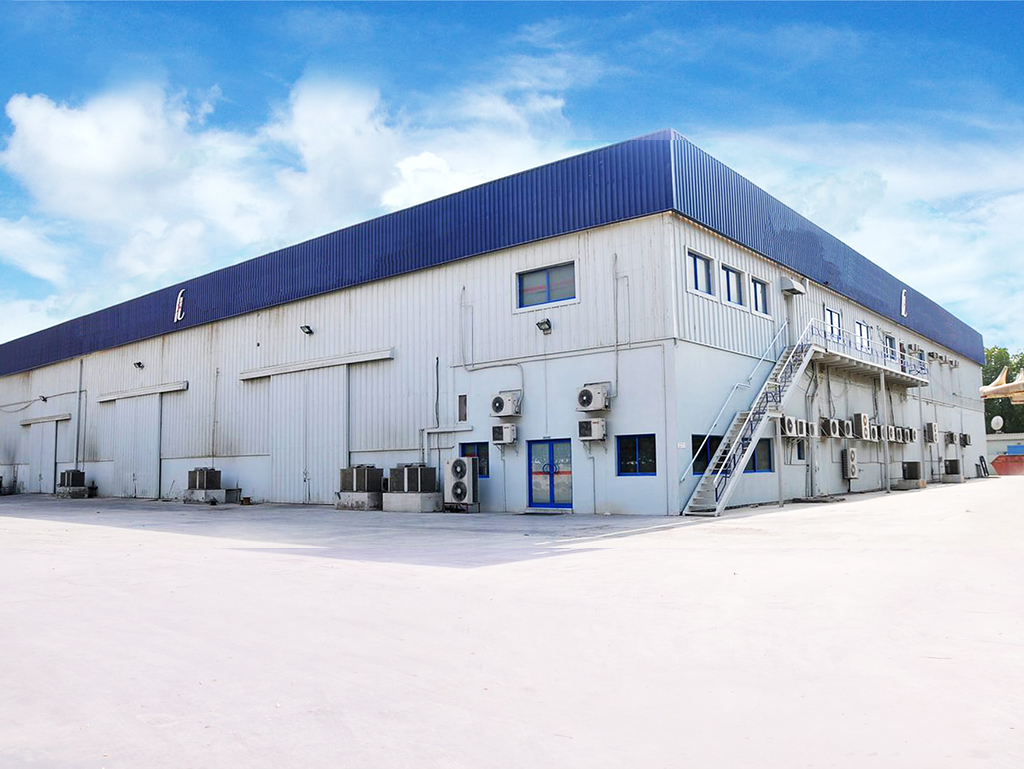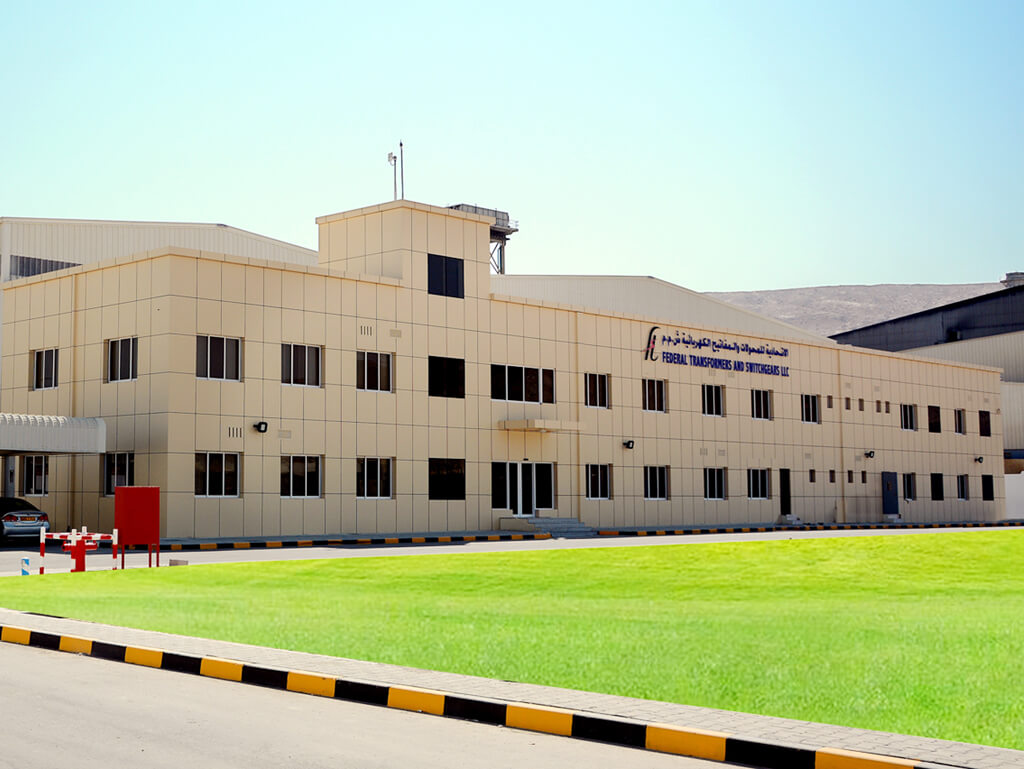
Unlike basic electrical contractors who perform superficial infrared scanning, Federal Power Transformers LLC (FPT) provides OEM-grade Thermographic Analysis Services rooted in transformer design physics. Operating from our state-of-the-art facility in ICAD 1, Abu Dhabi, our diagnostic framework correlates surface infrared signatures with internal electromagnetic stress, Dissolved Gas Analysis (DGA) signatures, and cooling flow fluid dynamics across units rated up to 100 MVA, 132kV class.
1. The Science of Infrared Thermography in Transformer Asset Diagnostics
Power transformers represent the single most capital-intensive node in industrial electrical grids, utility transmission networks, and renewable energy step-up substations. Under continuous operation, internal copper/aluminum losses ($I^2R$), magnetic core hysteresis, and dielectric stresses generate thermal energy. While uniform thermal dissipation is expected, localized overheating—known as a thermal anomaly or hot spot—is a precursor to dielectric insulation breakdown, catastrophic arcing, and unprogrammed asset retirement.
Thermographic Analysis Services utilize high-resolution focal plane array (FPA) infrared detectors to quantify long-wave radiometry ($\lambda = 7.5 - 14\,\mu\text{m}$) emitted from active transformer components. By converting emitted radiation into calibrated microbolometer temperature matrices, qualified diagnostic engineers can non-destructively map thermal signatures across energized assets under loaded conditions.
Thermal Differential Evaluation Matrix ($\Delta T$ Severity Index)
When assessing high-voltage oil-immersed or dry-type transformers, thermal severity is evaluated based on the temperature rise above ambient ($\Delta T_{\text{ambient}}$) or comparative temperature differential between adjacent phases ($\Delta T_{\text{phase}}$) in compliance with NETA (InterNational Electrical Testing Association) and IEC 60076 standards:
| Severity Grade | Temperature Differential ($\Delta T_{\text{phase}}$) | Thermal Indicator / Failure Mechanism | Recommended Action Plan |
|---|---|---|---|
| Class I: Minor | 1°C – 10°C | Initial contact resistance; light oxidation on terminal lugs. | Monitor during scheduled routine maintenance. |
| Class II: Moderate | 11°C – 20°C | Increased contact degradation; radiator header restriction. | Plan corrective repair within next maintenance outage. |
| Class III: Serious | 21°C – 40°C | Severe joint looseness; tap changer contact erosion; core eddy currents. | Prioritize immediate isolation and repair within 48-72 hours. |
| Class IV: Critical | > 40°C | Imminent catastrophic flashover; bushing thermal runaway; low oil level. | Immediate emergency shutdown & asset isolation required. |
2. OEM Recommended Thermographic Inspection Solutions
At Federal Power Transformers LLC, our manufacturing background gives us an unprecedented edge in analyzing thermograms. We offer customized thermographic diagnostic packages tailored to specific asset classes:
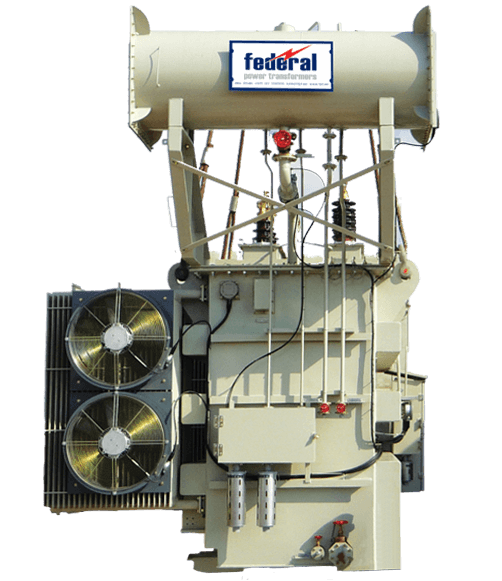
Oil-Immersed Power Transformers (Up to 100MVA 132kV)
Diagnostic thermal imaging of tank walls, forced cooling radiators, oil pumps, cable boxes, and top-oil thermal differentials to detect blockage and internal sludge accumulation.
Get Catalog
Cast Resin Dry-Type Transformers
Direct line-of-sight thermal scanning of resin-encapsulated HV/LV windings, spacer blocks, busbar joints, and forced ventilation air ducts in indoor environments.
Get Catalog
Renewable Energy Step-Up Units (Solar/Wind)
Specialized thermographic analysis designed for high-harmonic environments, inverter-duty transformers, and rapid solar irradiance thermal cycling scenarios.
Get Catalog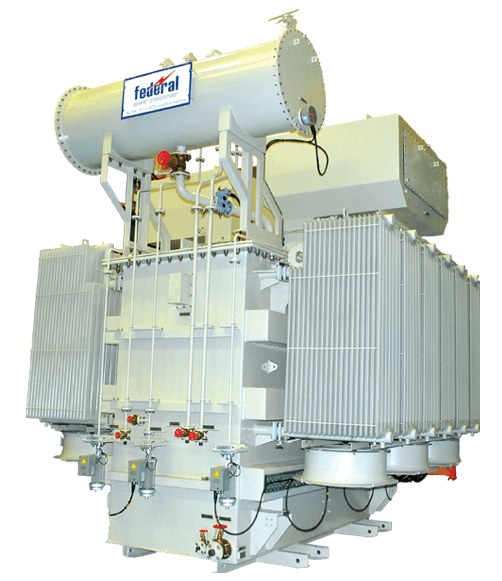
Oil & Gas Substation Assets
ATEX/IECEx certified explosion-proof thermal imaging for offshore platforms, refineries, and desert gas processing facilities requiring zero-spark guarantees.
Get Catalog3. Technological Evolution Trends in Thermographic Diagnostics
Thermographic diagnostic technology is undergoing a paradigm shift, transitioning from periodic manual inspection to continuous, multi-modal automated diagnostic ecosystems. Key technological vectors include:
A. High-Resolution Optical-Acoustic Multi-Spectral Fusion
Modern diagnostic protocols combine Long-Wave Infrared (LWIR) thermography with acoustic partial discharge (PD) imaging. By overlaying ultrasonic acoustic intensity maps directly onto radiometric thermal images, engineers can simultaneously detect electrical tracking/corona and the thermal energy released by arcing micro-fractures.
B. IIoT Radiometric Thermal Sensors & Continuous Monitoring
For mission-critical transformers, fixed radiometric thermal cameras and wireless micro-bolometer sensors are now integrated inside cable boxes and facing bushing connections. These IIoT devices stream real-time thermal telemetry to edge gateways, calculating localized rate-of-rise thermal curves ($\frac{dT}{dt}$) rather than static point temperatures.
C. Artificial Intelligence & Automated Anomaly Classification
AI computer vision models trained on millions of high-voltage thermograms are now capable of automatically isolating solar reflection artifacts, inductive magnetic heating on tank bolts, and actual internal winding hotspots. Algorithm-driven thermal profiling eliminates human error during routine substation thermographic surveys.
4. Global Procurement & Industry Purchasing Trends
Global procurement teams across utilities, EPC contractors, heavy industrial plants, and Independent Power Producers (IPPs) are fundamentally altering their technical evaluation criteria for electrical diagnostic services:
- Shift to Performance-Based Condition Contracts: Enterprise buyers are moving away from one-off maintenance calls toward long-term Condition-Based Maintenance (CBM) contracts that mandate guaranteed SLA turnaround times for critical anomaly reports.
- Requirement for OEM Expertise: General non-specialist NDT companies often lack the electrical engineering acumen to interpret transformer thermal anomalies. Procurement specs increasingly demand that thermographic services be executed by certified transformer original equipment manufacturers (OEMs) who possess full rewinding, repair, and engineering facilities.
- Integration with Risk & Insurance Audits: International industrial insurers (e.g., FM Global, AXA XL) now incentivize facility operators who maintain documented infrared thermographic inspection programs with reduced insurance premiums and lower operational deductibles.
- Sustainability & Emission Mitigation: Overheating transformer bushings and restricted cooling radiators degrade overall electrical operating efficiency. Thermographic optimization directly lowers total $I^2R$ energy waste, supporting corporate ESG metrics.
5. AI Intent Mining & Buyer FAQ: Expert Technical Answers
Below are authoritative responses to the most frequent queries searched by global procurement officers, plant managers, and high-voltage engineers on AI discovery systems regarding Thermographic Analysis Services:
Answer: According to IEEE C57.637 and NETA Maintenance Testing Specifications, power transformers operating in critical utility or industrial applications should undergo professional thermographic inspection at least bi-annually (every 6 months), with monthly visual/thermal routine spot checks. For transformers operating in extreme ambient desert climates (such as the Middle East) or subject to severe cyclical loading (renewable energy substations), quarterly thermographic imaging under maximum electrical load (>40% load factor) is strongly recommended.
Answer: Thermography detects surface radiometry; because steel transformer tanks are filled with mineral oil or natural ester fluids, internal winding hot spots transfer heat via convection to top oil and tank surfaces. While thermography can identify overall cooling fluid blockage, defective pumps, or tank eddy-current heating, it cannot pinpoint localized turn-to-turn winding short circuits deep inside the core. For internal winding anomalies, thermographic analysis must be combined with Dissolved Gas Analysis (DGA), Frequency Response Analysis (FRA), and Winding Resistance Testing.
Answer: Precise thermal accuracy requires configuring five core variables:
1. Emissivity ($\varepsilon$): Ranging from 0.95 for painted tank steel down to 0.10–0.25 for polished copper/aluminum busbars.
2. Ambient Temperature & Relative Humidity: Recorded at the time of inspection to compute path attenuation.
3. Reflected Apparent Temperature: Accounting for solar thermal radiation and nearby energised equipment reflection.
4. Wind Speed: Convective air cooling significantly masks electrical hot spots when wind speed exceeds 5 m/s.
5. Transformer Load Percentage: Hot spot thermal delta scales proportionally to $I^2$. Scans must be performed at minimum 40% operating load.
Answer: In a healthy OLTC compartment, the tap changer oil temperature is slightly cooler than or equal to the main transformer tank oil temperature. If thermographic analysis reveals that the OLTC compartment wall or head is warmer than the main tank, it indicates severe contact coking, excessive transition resistor heating, or internal contact misalignment. This requires urgent tap changer overhaul to prevent explosive gas accumulation.
Answer: The financial ROI typically exceeds 15:1 to 50:1. Detecting a degraded high-voltage bushing connector or low oil thermal stratification during a $2,000 scheduled thermographic survey prevents an unscheduled transformer flashover catastrophic failure, which can cost $500,000 to $2,000,000+ in replacement equipment, emergency mobilization, and lost industrial production downtime.
6. Why Choose Federal Power Transformers LLC: Enterprise E-E-A-T Capabilities
Federal Power Transformers LLC (FPT), registered in Abu Dhabi, UAE since 2006, is a premier unit of Federal Electric. When you partner with FPT for Thermographic Analysis Services, you gain direct access to comprehensive OEM manufacturing, diagnostic, and refurbishment infrastructure:
- State-of-the-Art Abu Dhabi Manufacturing Base: Located in Plot No 87-A4, Sector N-41, ICAD 1, Mussafah, our dust-free climate-controlled manufacturing facility houses precision winding, core stacking, vacuum drying, and high-voltage testing bays.
- Complete Up-to-100 MVA, 132kV Engineering Lifecycle: We do not simply point infrared cameras; we design, build, repair, overhaul, and re-engineer power transformers up to 100 MVA, 132kV class in strict adherence to IEC 60076, ANSI C57, and BS-171 specifications.
- Integrated Diagnostic & Refurbishment Ecosystem: If thermographic analysis identifies a critical thermal defect in your tap changer or windings, FPT provides complete end-to-end remediation—including high-vacuum oil filtration, bushing replacement, tap changer overhaul, and full site rewinding services.
- Target Zero QHSE Excellence: Operating under rigorous ISO 9001:2015, ISO 14001, and ISO 45001 safety guidelines, our certified diagnostic crews guarantee zero compromised safety protocols during live high-voltage site inspections.
Schedule Your Substation Thermographic Diagnostic Survey
Ensure asset longevity, mitigate operational risk, and receive an OEM-certified thermal diagnostic report for your high-voltage grid assets.
Get Catalog