
Power Transformer Insights & Technical Articles
Explore expert perspectives, maintenance guides, and technological advances in power & distribution transformers.
Solar & Wind Transformer Innovations
Technical articles focusing on step-up transformer design for modern renewable energy projects.
Oil & Gas Transformer Applications
Best practices and safety standards for robust transformer operation in extreme environmental conditions.
IEC & ANSI Testing & Standards
In-depth reviews on quality control, insulation analysis, and life-cycle assessment of high voltage transformers.
Best Mobile Substation Transformers Suppliers in China?
Table of Contents
- What Is a Mobile Substation Transformer?
- Key Features and Applications of Mobile Substation Transformers
- How to Evaluate Chinese Mobile Substation Transformer Suppliers
- Leading Supplier Types and Manufacturing Capabilities in China
- How to Select the Best Supplier for Your Project
- FAQS
- Conclusion
- Related Posts
Choosing the Best Mobile Substation Transformers Suppliers in China requires more than comparing prices or browsing polished product pages. These systems support temporary power restoration, planned maintenance, construction sites, and emergency grid reinforcement. A dependable supplier must understand both transformer engineering and transport realities.
John D. McDonald, a respected power-system engineering specialist, has emphasized a practical principle: “Reliability depends on designing for the conditions the system will actually face.” That idea fits Mobile Substation Transformers closely. A unit may look excellent in a factory photograph, yet fail expectations if its voltage class, impedance, cooling method, or road dimensions are unsuitable. Field conditions matter. Mud, heat, tight access roads, and rushed commissioning can expose weak planning.
This guide examines Chinese suppliers through measurable details. These include rated capacity, insulation design, noise control, protection equipment, factory testing, and delivery support. It also considers mobile platforms, cable arrangements, control cabinets, and compatibility with local grid standards. Certifications help, but they do not tell the whole story. Test reports must be reviewed carefully. References from similar projects are even more valuable.
Some comparisons remain imperfect. Public supplier information can be incomplete or heavily promotional. That is why buyers should request drawings, test records, warranty terms, spare-parts plans, and commissioning procedures. The best supplier is not always the largest. It is the one that communicates clearly, documents its claims, and responds responsibly when conditions change. Reliability is demonstrated in details, not slogans.
What Is a Mobile Substation Transformer?
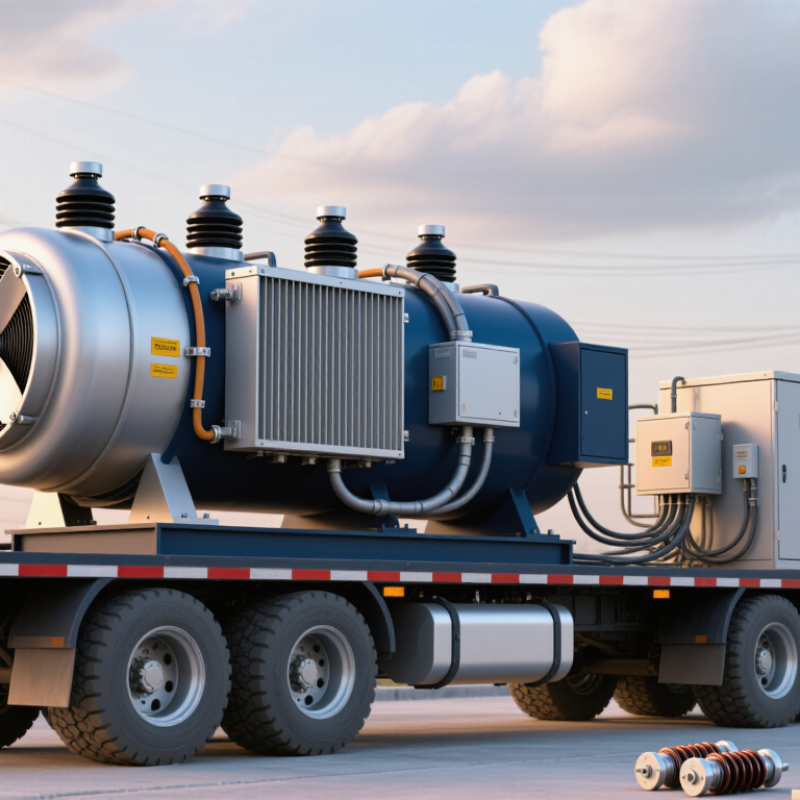
A mobile substation transformer is a transportable power unit designed for temporary or emergency grid service.
It usually combines a transformer, high-voltage switchgear, protection systems, control equipment, and a movable platform. Unlike a permanent substation, it can be delivered by trailer and connected near a damaged line, construction site, or overloaded network.
Speed matters. The International Energy Agency’s Electricity 2024 report projects global electricity demand growth of about 4% annually through 2026. IRENA reported 473 GW of new renewable capacity in 2023, increasing the need for adaptable transformers and faster connection solutions.
A mobile substation can support maintenance, disaster recovery, and temporary renewable integration without waiting for full civil construction.
When evaluating suppliers in China, buyers should examine transport dimensions, cooling performance, insulation levels, noise control, and protection coordination. Compliance with IEC 60076 and local grid requirements is essential.
Factory testing should include temperature-rise, impulse, short-circuit, and routine electrical tests. It is not simple. Site access, grounding, road limits, and crane capacity can delay deployment more than manufacturing does.
Buyers sometimes focus on transformer rating and overlook cable termination design. That is a practical mistake.
A credible supplier should provide test records, drawings, installation guidance, and spare-part support. Even then, delivery estimates need careful review because a “mobile” unit may still require several weeks for permits and commissioning.
Key Features and Applications of Mobile Substation Transformers
Mobile substation transformers combine a transformer, switchgear, protection, and control equipment on a transportable platform. Their main value is rapid power restoration after storms, floods, equipment failures, or planned maintenance. A typical unit arrives on a trailer, connects through tested cables, and supports temporary distribution within hours. That speed matters. Engineers should verify voltage ratio, rated capacity, impedance, cooling method, and insulation level before shipment. Outdoor enclosures need corrosion resistance, sealed cable compartments, and safe access for inspection.
Reliable suppliers in China should provide routine test reports, design drawings, traceable components, and clear installation guidance. Independent inspection can confirm winding resistance, dielectric performance, temperature rise, and protection settings. Ask about transport dimensions, axle loads, lifting points, and local grid requirements. A compact footprint is useful. However, excessive compactness may restrict maintenance space or increase heat concentration. This tradeoff deserves practical review, not just a catalogue comparison.
Applications include emergency substations, construction sites, renewable energy projects, mining areas, and temporary industrial loads. For solar and wind projects, the transformer must match variable generation and medium-voltage collection systems. For hospitals and data facilities, protection coordination and backup connection procedures require careful testing. Field experience shows that overlooked cable routing often delays energization more than transformer delivery. Specifications can still miss real site conditions. A dependable supplier responds with measured evidence, not promises, and supports corrective changes when the original plan proves incomplete.
How to Evaluate Chinese Mobile Substation Transformer Suppliers
Evaluating Chinese mobile substation transformer suppliers requires more than comparing prices. The IEA’s Electricity 2024 report expects China to drive about 60% of global electricity demand growth through 2026. This pressure increases the value of fast, dependable temporary power equipment. Ask suppliers for verified factory capacity, delivery records, and project references with similar voltage ratings. A polished brochure is not evidence.
Technical checks should follow IEC 60076 requirements especially transformer insulation, temperature rise, losses, and short-circuit strength. Request routine and type-test reports from accredited laboratories. Compare impedance, cooling performance, noise levels, transport dimensions, and on-site assembly procedures. The IEC 60076-5 standard is particularly useful when evaluating mechanical resistance during faults. Inspect the factory, if possible. Look at winding cleanliness, oil processing, sealing, and final inspection records.
Reliability also depends on service. Confirm spare-part availability, remote troubleshooting, warranty response times, and technician coverage near your project. ISO 9001 certification supports process control, but it does not guarantee field performance. Review failure statistics and ask how defects are handled. Some suppliers provide impressive test documents but weak commissioning support. That gap matters. A mobile unit may cross rough roads, face rain, and operate under urgent load changes. Laboratory results cannot fully reproduce those conditions. Leave room for doubt, and verify every critical claim with independent evidence.
Leading Supplier Types and Manufacturing Capabilities in China
China’s mobile substation transformer market includes several supplier types. Dedicated transformer manufacturers usually offer stronger engineering depth and factory testing. Their plants may produce oil-immersed, dry-type, skid-mounted, and containerized transformer systems. Some also build switchgear, protection panels, cooling units, and cable compartments.
EPC-oriented suppliers provide broader packages. They can coordinate transformers, mobile platforms, control systems, and site installation. This suits utilities and industrial projects needing one technical interface. Trading companies may offer wider sourcing access, but buyers should verify factory ownership, engineering responsibility, and after-sales support. A real manufacturing supplier should provide drawings, material lists, temperature-rise data, insulation results, and routine test reports.
Manufacturing capability matters more than catalog size. Check whether the supplier can design for voltage levels, load profiles, transport limits, and local climate conditions. Ask about short-circuit testing, enclosure protection, lifting points, grounding, and emergency deployment time. Factory visits can reveal practical details, such as winding cleanliness, oil filling procedures, and final inspection discipline. No supplier is perfect. A capable supplier should openly discuss limitations, spare-parts planning, and design changes. I would also compare prototype quality with serial production quality, because the first unit can look better than later units. Reliable suppliers communicate clearly, document revisions, and support commissioning after delivery.
How to Select the Best Supplier for Your Project
Selecting a mobile substation transformer supplier in China requires more than comparing rated prices. Begin with project data: voltage ratio, MVA capacity, frequency, impedance, cooling method, transport limits, and installation climate. Ask for proven drawings, type-test reports, routine-test records, and protection details. A supplier should explain decisions clearly, not hide behind technical language.
Visit the factory, or arrange an independent audit. Check winding assembly, vacuum treatment, oil handling, welding quality, and final inspection areas. Confirm compliance with the standards required by your grid authority and destination country. Request references from projects with similar voltage levels and emergency deployment needs. Discuss lead times in writing, including design approval, testing, packing, customs documents, and spare parts. Small delays can become expensive outages.
Evaluate field support as carefully as manufacturing. Clarify commissioning supervision, remote troubleshooting, warranty response, training, and repair responsibilities. Ask how the unit performs on rough roads, uneven foundations, and rapid connection schedules. Cost still matters. The lowest quotation may exclude testing or site services. That is a common trap. A detailed comparison table helps reveal it. No checklist is perfect; project conditions can change after purchase. Keep a technical review gate before production, and let an experienced engineer challenge optimistic assumptions.
| Evaluation Dimension | Suggested Weight | Practical Project Benchmark | What the Supplier Should Provide | Selection Guidance |
|---|---|---|---|---|
| Transformer Rating and Voltage Class | 15% | Mobile substations are commonly engineered for medium- and high-voltage distribution or transmission applications. Typical project ratings may range from several MVA to tens of MVA, depending on the network requirement. | Rated power, primary and secondary voltages, frequency, vector group, impedance, tap range, insulation level, and applicable operating altitude. | Choose a supplier that can match the exact system voltage, fault level, load profile, and temporary operating duty rather than offering only a standard catalogue model. |
| Complete Mobile Substation Integration | 15% | A complete package may include the transformer, high-voltage and low-voltage switchgear, protection and control, auxiliary power, cable termination, trailer or skid, and grounding equipment. | Single-line diagram, general arrangement drawing, interface list, bill of materials, control philosophy, and responsibility matrix. | Prefer a supplier capable of coordinating the complete package to reduce interface risks between the transformer, switchgear, protection system, and transport platform. |
| Applicable Standards and Compliance | 12% | Power transformers are generally specified against the applicable IEC 60076 series or equivalent national and utility standards. Local electrical, transport, and environmental rules also apply. | Standards compliance statement, design calculations, certificates, inspection plan, and confirmation of deviations from the project specification. | Require written compliance with the project standards. Do not accept a generic conformity statement that does not identify the exact transformer and accessory requirements. |
| Factory Testing and Quality Control | 12% | Routine transformer tests normally include winding resistance, voltage ratio, phase displacement, impedance, load loss, no-load loss, dielectric tests, and functional checks as applicable to the design. | Inspection and test plan, calibrated instrument records, routine test reports, quality-control procedures, nonconformance process, and customer witness points. | Give higher scores to suppliers that allow documented factory acceptance testing and provide traceable test results for the delivered unit. |
| Transportability and Site Deployment | 10% | Transport dimensions, axle loads, total mass, turning radius, lifting points, road restrictions, and site access can determine whether the unit is practical for emergency or temporary use. | Certified transport drawings, shipping weight, axle-load data, lifting plan, center-of-gravity information, tie-down points, and installation procedure. | Evaluate the complete route and installation method before purchase. A technically suitable transformer may be unsuitable if transport permits or site access are not available. |
| Protection, Control, and Communications | 10% | Typical functions may include overcurrent, earth-fault, differential or restricted-earth-fault protection where required, transformer temperature monitoring, trip circuits, alarms, and remote status signals. | Protection study inputs, relay list, setting files, wiring diagrams, communication protocol information, interlocking logic, and control-panel test records. | Confirm compatibility with the existing substation automation and protection system. Require clear ownership of relay settings and commissioning responsibilities. |
| Cooling, Safety, and Environmental Design | 8% | Cooling arrangements must suit the rated load and ambient conditions. Oil containment, fire separation, pressure relief, temperature alarms, and safe access are important for temporary installations. | Cooling-class data, thermal performance calculations, oil specifications, leak-prevention details, pressure-relief information, grounding design, and safety instructions. | Check ambient temperature, altitude, humidity, seismic conditions, noise limits, fire requirements, and environmental restrictions at the deployment site. |
| Delivery Schedule and Spare-Parts Support | 7% | Schedule depends on rating, voltage class, core and winding materials, accessories, testing requirements, transport approvals, and customization. A fixed delivery promise should be supported by a production plan. | Milestone schedule, engineering-submittal dates, manufacturing plan, critical-component list, spare-parts recommendation, and after-sales response process. | Use contractual milestones for drawing approval, material release, factory testing, shipment, site arrival, and commissioning instead of relying on an undated lead-time statement. |
| Installation, Commissioning, and Training | 6% | Commissioning normally includes inspection, insulation checks, ratio and polarity verification, protection testing, control-function checks, grounding verification, and energization procedures. | Installation manual, commissioning checklist, test forms, operator training plan, recommended tools, and technical-support contact process. | Confirm whether field service is available in the destination country and define travel, labor, warranty, and emergency-support terms in the contract. |
| Commercial Terms and Total Cost of Ownership | 5% | The purchase price is only one cost element. Engineering, testing, transport, import duties, installation, commissioning, spares, maintenance, losses, and disposal may materially affect the total cost. | Itemized quotation, Incoterms, payment schedule, warranty conditions, exclusions, consumables list, expected losses, maintenance requirements, and lifecycle-cost assumptions. | Compare technically equivalent offers using the same scope, test requirements, delivery basis, warranty period, and site-service assumptions. |
Note: The percentages are a suggested project-evaluation model. Final requirements, ratings, tests, delivery conditions, and compliance obligations should be confirmed in the approved technical specification and purchase contract.
FAQS
It is a transportable power unit for temporary or emergency grid service. It may include a transformer, switchgear, protection systems, controls, and a movable platform.
It can support damaged lines, construction sites, overloaded networks, maintenance work, and disaster recovery. It may also assist temporary renewable energy connections.
Electricity demand is growing, while renewable capacity is expanding quickly. Flexible equipment can help utilities connect power sooner and reduce construction delays.
Check transport dimensions, cooling performance, insulation levels, noise control, and protection coordination. Also review local grid requirements and IEC 60076 compliance.
Important tests include temperature-rise, impulse, short-circuit, and routine electrical testing. Ask for complete test records, not only summarized results.
Narrow roads, weak bridges, limited crane capacity, poor grounding, and difficult cable access can delay deployment. Manufacturing may not be the slowest step.
Cable termination affects connection safety, installation time, and maintenance access. Buyers often focus on transformer rating and overlook this detail.
Dedicated manufacturers usually provide deeper engineering support. EPC-oriented suppliers coordinate broader packages, while trading companies may offer wider sourcing options.
Request drawings, material lists, temperature-rise data, insulation results, and routine test reports. A factory visit can reveal cleanliness and inspection discipline.
“Mobile” does not always mean immediate. Permits, transport planning, site preparation, commissioning, and spare parts may require several weeks.
The supplier should explain design limits, lifting points, grounding, enclosure protection, climate conditions, and emergency deployment time. Honest limitations matter.
Yes. The first unit may look better than later units. Compare production records, revision control, inspection procedures, and commissioning support.
Conclusion
Mobile Substation Transformers are flexible, transportable power units designed to provide temporary or emergency electricity supply when a substation is being repaired, upgraded, overloaded, or affected by unexpected outages. Their compact structure, rapid installation, high-voltage adaptability, protection systems, and ability to operate in different environments make them useful for utilities, renewable energy projects, industrial facilities, construction sites, and disaster recovery. Depending on project requirements, they may be customized with transformers, switchgear, control systems, cooling equipment, and trailer-mounted platforms.
When evaluating Chinese suppliers, buyers should consider manufacturing experience, transformer capacity, voltage range, insulation quality, safety protection, testing procedures, delivery capability, and after-sales technical support. A reliable supplier should offer clear technical documentation, factory quality control, relevant certifications, customization options, and responsive communication. The best choice depends on the project’s load requirements, mobility needs, operating environment, budget, installation schedule, and long-term maintenance plan. Comparing supplier capabilities carefully helps ensure that the selected Mobile Substation Transformers provide stable performance, efficient deployment, and dependable power support.

Blog Tags: