
Industry Knowledge & Technical Insights

Power Transformer Insights & Technical Articles

Explore expert perspectives, maintenance guides, and technological advances in power & distribution transformers.

Renewable Integration

Solar & Wind Transformer Innovations

Technical articles focusing on step-up transformer design for modern renewable energy projects.

Industrial Excellence

Oil & Gas Transformer Applications

Best practices and safety standards for robust transformer operation in extreme environmental conditions.

Quality & Compliance

IEC & ANSI Testing & Standards

In-depth reviews on quality control, insulation analysis, and life-cycle assessment of high voltage transformers.

0%

Industrial Power Transformers are the quiet backbone of modern electricity networks. They raise or reduce voltage across generation plants, substations, factories, and renewable energy sites. A failed unit can interrupt production, damage equipment, and create costly delays. Choosing a manufacturer, therefore, demands more than comparing catalogue prices.

This guide examines leading manufacturers worldwide through practical and technical criteria. We consider transformer capacity, voltage range, cooling systems, insulation design, efficiency, and application experience. We also review engineering depth, factory testing, delivery capability, installation support, and long-term maintenance. Reliable suppliers should provide clear test records, traceable materials, and documentation aligned with relevant IEC or IEEE requirements. Field performance matters too. A transformer operating beside a steel mill faces heat, vibration, dust, and frequent load changes.

Details reveal quality. Look for winding construction, oil preservation systems, monitoring sensors, noise control, and protection against moisture. Ask how the manufacturer manages spare parts and emergency repairs. Ask harder questions.

The companies discussed here serve different markets, so no single ranking fits every project. Some excel in ultra-high-voltage transmission, while others focus on compact industrial substations or customized renewable applications. Public information can also be incomplete, and marketing claims deserve independent verification. That limitation is worth admitting. Procurement teams should compare audited performance, lifecycle cost, local service coverage, and actual operating references before signing contracts. This approach supports safer decisions and helps buyers identify manufacturers capable of delivering dependable Industrial Power Transformers over decades, not merely at shipment.
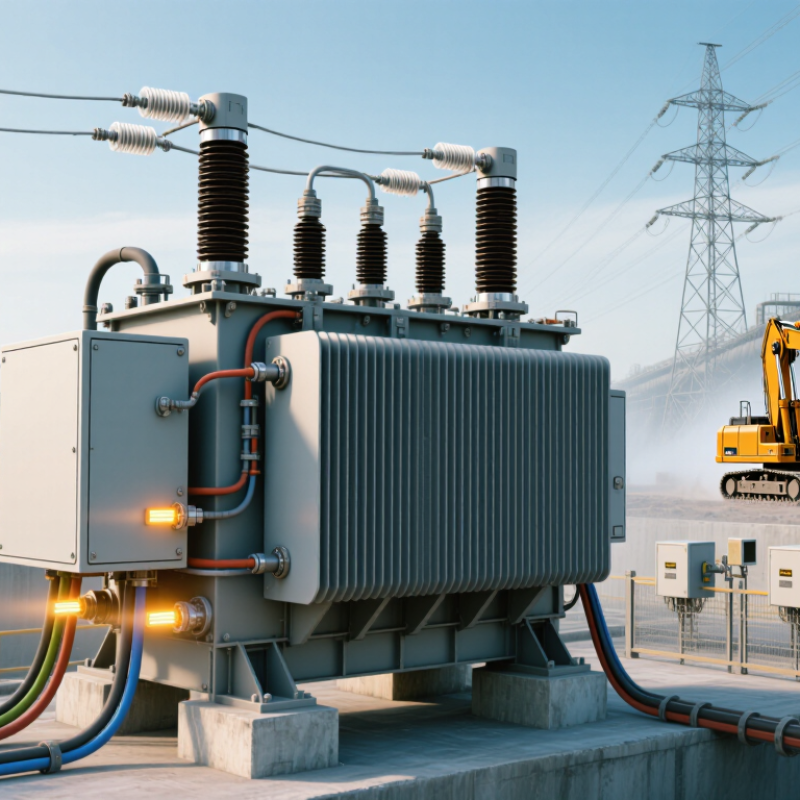
Top Industrial Power Transformer Manufacturers Worldwide

Industry Overview and Role of Power Transformers

Top Industrial Power Transformer Manufacturers Worldwide

Power transformers are the quiet hinges of modern electricity systems. They raise voltage for long-distance transmission and reduce it before electricity reaches factories, rail networks, and cities. The International Energy Agency reported in Electricity 2024 that global electricity demand may grow by about 3.4% annually from 2024 to 2026. This growth places direct pressure on transformer capacity, grid stability, and replacement planning.

The IEA’s 2023 Grids and Secure Energy Transitions report estimates that annual grid investment must rise to more than $600 billion by 2030. Industrial transformer manufacturers therefore compete on more than rated capacity. Engineers examine short-circuit strength, insulation aging, cooling performance, noise, and factory testing records. A transformer may look flawless outside while moisture quietly weakens its insulation. That detail matters.

Reliable selection also depends on operating evidence. Dissolved gas analysis can reveal overheating, arcing, or paper insulation damage before failure. Online temperature sensors add useful visibility, especially near steel plants and renewable-energy substations. Standards from the International Electrotechnical Commission and technical guidance from CIGRE support consistent testing practices. Still, reports are not reality. Site conditions, maintenance habits, and loading changes can distort predictions. Some procurement decisions remain too focused on purchase price. That is a weakness worth challenging. A lower initial cost can create higher outage exposure, energy losses, and difficult repairs over decades.

Key Criteria for Evaluating Global Transformer Manufacturers

Top Industrial Power Transformer Manufacturers Worldwide

Key Criteria for Evaluating Global Transformer Manufacturers

Evaluating a transformer manufacturer requires more than comparing quoted prices. Start with documented experience in similar voltage classes, capacities, climates, and grid conditions. A supplier serving coastal substations should understand salt exposure, humidity, and corrosion control. Ask for project references with verifiable operating records.

Technical capability should be visible in the design and testing process. Review core and winding calculations, insulation coordination, cooling methods, and expected efficiency losses. Factory acceptance tests should include ratio checks, winding resistance, insulation tests, temperature-rise testing, and partial-discharge measurements where applicable. Test equipment must be calibrated and traceable. Small details matter.

No scorecard is perfect.

Reliability also depends on after-sales support. Examine spare-parts availability, installation guidance, response times, and field-service coverage near the project site. Request clear warranty terms and procedures for handling abnormal noise, oil leakage, or unexpected temperature readings. A capable manufacturer should explain limitations instead of promising flawless performance. That honesty is useful evidence.

Financial strength deserves attention, especially for large projects with long production cycles. Review delivery history, quality records, safety practices, and supply-chain controls. Independent inspections can reduce uncertainty before shipment. Still, paperwork may hide practical weaknesses. A clean audit does not guarantee smooth commissioning. Direct discussions with engineers and previous customers often reveal more than polished presentations.

Top Industrial Power Transformer Manufacturers Worldwide - Key Criteria for Evaluating Global Transformer Manufacturers

Evaluation Dimension Objective Data Point or Reference What to Verify Recommended Evidence Priority
International Design Standards IEC 60076 series and/or IEEE C57 standards are widely used references for power-transformer design, testing, and performance. Whether the proposed design follows the standards required by the installation country and utility. Standards compliance matrix, approved drawings, and project specifications. Critical
Rated Power and Voltage Range Power transformers are commonly specified in MVA, while system voltage is specified in kV; ratings must match the network operating conditions. Experience with the required MVA rating, highest voltage for equipment, vector group, tap range, and frequency of 50 or 60 Hz. Technical datasheets, guaranteed technical particulars, and reference-project list by rating. Critical
Energy Efficiency and Losses No-load loss and load loss are normally evaluated separately because they occur under different operating conditions. Guaranteed losses at the specified reference temperature, tolerances, capitalization method, and lifetime energy cost. Loss calculation sheets, routine-test results, and independently witnessed test reports. Critical
Insulation Coordination IEC 60076-3 addresses insulation levels, dielectric tests, and external clearances for power transformers. Lightning impulse, switching impulse where applicable, applied-voltage, and induced-voltage test requirements. Type-test certificates, routine-test reports, and insulation-coordination study. Critical
Short-Circuit Withstand IEC 60076-5 covers the ability of transformers to withstand the thermal and dynamic effects of external short circuits. Compliance with the calculated fault current, mechanical-strength requirements, and specified system impedance. Short-circuit test report, electromagnetic-force calculations, and winding design review. Critical
Factory Testing Capability Routine tests are performed on each unit; type and special tests are conducted when specified by the purchaser or applicable standard. Availability of calibrated equipment for ratio, winding resistance, impedance, losses, dielectric, and partial-discharge testing. Inspection and test plan, calibration certificates, quality records, and customer-witness arrangements. Critical
Oil and Insulation System Mineral insulating oil is commonly specified under IEC 60296 or ASTM D3487, depending on the project requirements. Oil quality, moisture control, dissolved-gas monitoring provisions, paper insulation selection, and fire-safety requirements. Oil test certificates, material certificates, processing records, and preservation-system details. High
On-Load Tap Changer An OLTC regulates transformer voltage while the transformer remains energized; tap range and number of positions are project-specific. Rated through-current, insulation level, transition-resistor design, motor-drive reliability, and maintenance interval. OLTC technical file, operation sequence, endurance data, spare-parts plan, and maintenance manual. High
Cooling and Thermal Performance Common IEC cooling designations include ONAN, ONAF, OFAF, and ODAF, indicating oil and air circulation methods. Continuous and emergency loading capability, hot-spot temperature, radiator capacity, fan redundancy, and noise level. Heat-run test results, thermal calculations, fan-control logic, and guaranteed noise data. High
Quality Management ISO 9001 specifies requirements for a quality-management system and is commonly requested in industrial procurement. Whether the certificate covers the manufacturing site and the relevant transformer product scope. Valid certificate, audit records, nonconformance process, and quality-performance statistics. High
Environmental and Safety Management ISO 14001 addresses environmental management systems, while ISO 45001 addresses occupational health and safety management systems. Environmental controls, hazardous-material handling, worker safety, emissions management, and site compliance. Current certificates, environmental permits, safety statistics, and factory audit reports. Medium
Reliability and Field Experience Reliability should be assessed using comparable installed units, operating years, voltage class, climate, and application duty. Failure rate, warranty claims, corrective-action history, and performance in similar industrial or utility environments. Anonymized reference list, fleet-performance data, customer acceptance records, and warranty statistics. Critical
Delivery and Project Execution Large power transformers commonly require coordinated engineering, manufacturing, testing, transport, site assembly, and commissioning. Manufacturing lead time, transport route, lifting limits, installation resources, and schedule-control process. Detailed project schedule, logistics plan, progress reports, installation method statement, and commissioning plan. Critical
Service, Spares, and Warranty Post-commissioning support typically includes inspection, oil analysis, diagnostics, spare parts, emergency response, and technical training. Warranty coverage, response time, local service capability, spare-parts availability, and long-term maintenance support. Warranty terms, service-level agreement, spare-parts catalogue, training plan, and escalation contacts. High
Total Cost of Ownership A complete evaluation should include purchase price, capitalization of losses, transport, installation, maintenance, energy use, downtime risk, and end-of-life costs. Whether the lowest initial price also provides competitive lifetime cost and acceptable operational risk. Lifecycle-cost model, loss-capitalization assumptions, maintenance forecast, and sensitivity analysis. Critical

Leading Industrial Power Transformer Manufacturers Worldwide

Top Industrial Power Transformer Manufacturers Worldwide

Leading industrial power transformer manufacturers worldwide combine engineering experience, controlled production, and reliable after-sales support. Their equipment serves power plants, factories, renewable projects, and heavy industrial sites. Strong manufacturers design transformers around load profiles, voltage levels, cooling methods, and installation conditions. They also assess humidity, dust, altitude, and temperature before production. A transformer may look robust, yet poor site data can cause costly problems.

Professional manufacturers use documented quality systems and perform routine electrical tests. These may include insulation resistance, winding resistance, ratio verification, and temperature checks. Experienced teams also inspect core assembly, oil systems, bushings, and protection devices. Clear test records support accountability. Field experience matters too. Engineers often identify vibration, overheating, or unusual noise before failures become serious. Still, no manufacturer gets every decision right. Design assumptions should be reviewed when operating conditions change.

Tips

Compare suppliers through test reports, service response times, warranty terms, and maintenance guidance. Ask for references from similar industrial environments. Check whether technicians can support commissioning and emergency repairs locally. Do not judge equipment by price alone. A lower initial cost may bring higher energy losses or longer downtime. Review total ownership costs, including efficiency, spare parts, inspections, and expected service life. Small details matter.

Core Technologies, Product Ranges, and Manufacturing Capabilities

Top Industrial Power Transformer Manufacturers Worldwide

Core Technologies, Product Ranges, and Manufacturing Capabilities

Leading manufacturers compete through engineering depth, not catalog size. Their core technologies include grain-oriented steel cores, optimized windings, and low-loss insulation systems. Advanced designs manage heat with directed oil flow, radiators, and real-time temperature sensors. Digital monitoring can track dissolved gases, moisture, bushing condition, and load history. These details matter in substations where a small fault can interrupt an entire production line.

Product ranges usually cover distribution units, medium-power transformers, and large grid transformers. Some factories also build furnace, rectifier, traction, and renewable-energy transformers. Customization may include tap changers, fire-resistant fluids, compact enclosures, or harsh-climate protection. Manufacturing capability depends on more than rated capacity. Core cutting accuracy, winding tension, vacuum drying, controlled assembly, and impulse testing all affect service life. Factory acceptance records should show measured losses, temperature rise, insulation strength, and leak performance. Independent inspection adds useful confidence, although it cannot replace field maintenance.

Tips: Compare proven designs with the actual load profile, not only the nameplate rating. Ask for type-test evidence and recent routine-test reports. Check spare-parts support, technician training, and response times before signing a contract. No design is perfect. Engineers should question assumptions about harmonics, short-circuit forces, and future load growth. A cheaper unit may become expensive when heat, noise, or delayed repairs appear.

Market Trends, Standards, and Future Development

Top Industrial Power Transformer Manufacturers Worldwide

Market Trends, Standards, and Future Development

Industrial power transformer manufacturing is moving toward higher efficiency, stronger resilience, and clearer lifecycle data. Utilities increasingly request units above 220 kV, compact designs, and lower no-load losses. Renewable projects also create unstable load patterns, especially during rapid solar or wind changes. Manufacturers must therefore improve thermal modelling, insulation coordination, and short-circuit strength.

International standards remain essential. IEC 60076 and IEEE C57 series guide design, testing, temperature rise, and fault performance. Factory acceptance tests may include ratio checks, lightning impulse tests, winding resistance measurements, and partial discharge monitoring. On-site teams still need careful oil sampling and bushing inspections. A compliant transformer can still fail when transport damage, poor grounding, or neglected maintenance is overlooked. Standards help, but they are not magic.

Tips: Compare total ownership cost, not only purchase price. Request verified loss data and documented test results. Check cooling performance at the project’s highest ambient temperature. Digital sensors can track oil temperature, moisture, and dissolved gases. Yet predictions remain imperfect. A sensor may drift. A model may miss an unusual fault. Future development should combine online monitoring, recyclable insulation fluids, modular repair methods, and cybersecurity controls. Engineers should review alerts with field evidence, not trust software blindly. Small details matter, such as loose terminal connections or blocked radiator fins.

FAQS

What core technologies improve industrial power transformer performance?

Grain-oriented steel cores reduce magnetic losses. Optimized windings improve electrical efficiency and short-circuit strength. Directed oil flow, radiators, and temperature sensors control heat. No design is perfect.

Which transformer types are commonly available for industrial projects?

Product ranges often include distribution, medium-power, and large grid transformers. Special designs may support furnaces, rectifiers, rail systems, or renewable projects. Selection depends on voltage, load behavior, and installation conditions.

How can a transformer be customized for difficult environments?

Options include tap changers, fire-resistant fluids, compact enclosures, and harsh-climate protection. High ambient temperatures require careful cooling calculations. Dust, moisture, and limited space also affect the design.

Which manufacturing steps most affect transformer service life?

Accurate core cutting and controlled winding tension are important. Vacuum drying removes damaging moisture from insulation. Controlled assembly and impulse testing reveal weaknesses before delivery. Small errors can become expensive later.

What factory documents should buyers request?

Request measured losses, temperature-rise results, insulation-strength records, and leak-test data. Recent routine-test reports are useful. Independent inspection adds confidence, but it cannot replace maintenance.

How should buyers compare transformer offers?

Compare total ownership cost, not only the purchase price. Review verified losses, cooling performance, spare-parts support, and repair response times. A cheaper unit may create higher costs through heat, noise, or delays.

Why are digital monitoring systems useful?

Sensors can track oil temperature, moisture, dissolved gases, bushing condition, and load history. These details may reveal developing faults. Sensors can drift. Software can also miss unusual problems.

Which installation and maintenance issues can cause failure?

Transport damage, poor grounding, blocked radiator fins, and loose terminals can cause serious trouble. Field teams should inspect bushings and sample the oil carefully. Standards help, but they are not magic.

Conclusion

Industrial Power Transformers are essential components in modern electrical infrastructure, supporting the reliable transmission and distribution of electricity across factories, utilities, renewable energy facilities, and large commercial networks. This article examines the industry’s structure and explains how transformers improve voltage management, system stability, energy efficiency, and operational safety. It also presents the key criteria for evaluating manufacturers, including engineering expertise, production capacity, product reliability, customization capabilities, quality control, testing procedures, after-sales support, and compliance with international standards.

The overview compares leading manufacturers worldwide without focusing on individual brand names, highlighting differences in technology, product portfolios, manufacturing processes, and service capabilities. It also discusses developments such as digital monitoring, smart grid integration, environmentally responsible materials, improved cooling systems, and higher efficiency designs. Finally, the article reviews market trends, industry standards, and future opportunities, emphasizing how innovation, sustainability, supply-chain resilience, and dependable performance will shape the next generation of industrial transformer solutions.

Sophia

Sophia

Sophia is a dedicated marketing professional with a profound expertise in the company’s product offerings. With a keen eye for detail and a passion for innovation, she skillfully navigates the complexities of the market to craft compelling narratives that resonate with clients and stakeholders......