
Power Transformer Insights & Technical Articles
Explore expert perspectives, maintenance guides, and technological advances in power & distribution transformers.
Solar & Wind Transformer Innovations
Technical articles focusing on step-up transformer design for modern renewable energy projects.
Oil & Gas Transformer Applications
Best practices and safety standards for robust transformer operation in extreme environmental conditions.
IEC & ANSI Testing & Standards
In-depth reviews on quality control, insulation analysis, and life-cycle assessment of high voltage transformers.
What Are the Top Electrical Busway Systems for Buyers?
Choosing among the top Electrical Busway Systems requires more than comparing catalog prices. Buyers must match the system with actual load demand, building layout, installation conditions, and future expansion plans. A compact sandwich busway may suit a data center corridor, while an air-insulated feeder system may better serve heavy industrial equipment. The difference is practical. It affects heat management, maintenance access, fire protection, and installation time.
This guide examines copper and aluminum conductors, plug-in units, tap-off boxes, enclosure ratings, and short-circuit withstand capacity. It also considers recognized requirements, such as IEC 61439, UL 857, and applicable local electrical codes. Certification matters. So does the manufacturer’s testing evidence, technical documentation, and service network. A trustworthy supplier should explain temperature-rise testing, ingress protection, joint design, and replacement procedures without hiding limitations.
No shortlist is perfect.
A buyer may prefer lower weight, but aluminum systems can require careful joint preparation. Copper offers strong conductivity, yet its cost and weight may challenge large projects. Installation teams also need clear torque values, alignment tools, and safe isolation procedures. These details are easy to overlook during procurement. Field performance depends on them. This article compares leading busway categories through a buyer-focused lens, balancing performance, reliability, lifecycle cost, and practical installation risk. Some recommendations will remain conditional, because site conditions rarely behave like a polished product brochure.
What Is an Electrical Busway System?
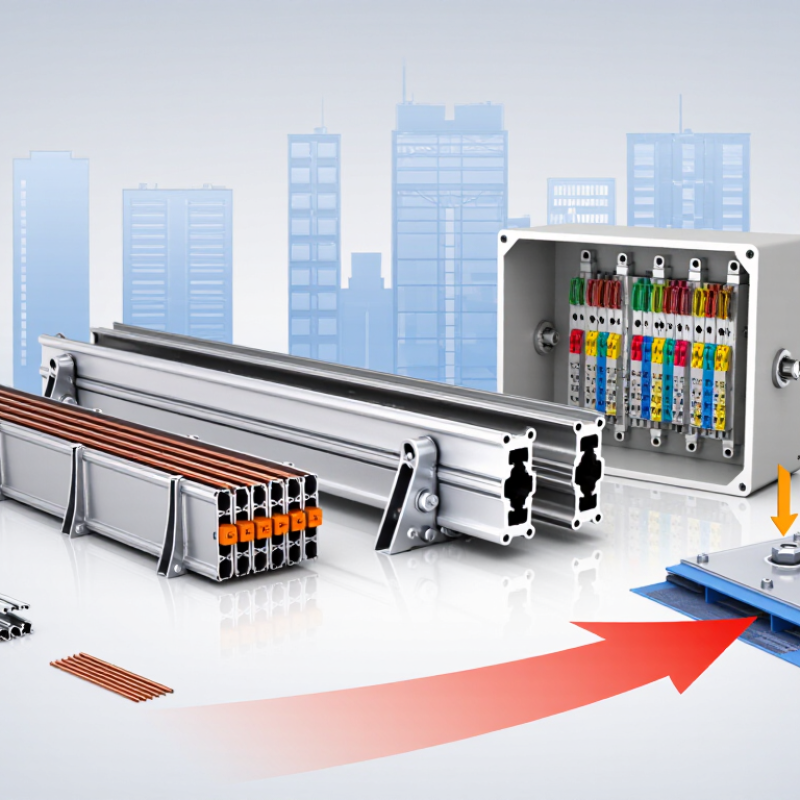
An electrical busway system is a modular power distribution assembly. It uses insulated conductors inside a protected metal housing. Plug-in tap-off units connect equipment along the route. Unlike fixed cable runs, busway can be extended, relocated, or serviced with less rewiring. Common designs include feeder busway, plug-in busway, sandwich construction, and air-insulated systems.
The International Electrotechnical Commission’s IEC 61439-6 standard covers low-voltage busbar trunking systems. Buyers should check short-circuit withstand ratings, enclosure protection, temperature rise, grounding, and tap-off compatibility. These details matter beside server racks, production lines, and high-load machinery. A 2024 Lawrence Berkeley National Laboratory report estimates that United States data centers could use 6.7% to 12% of national electricity by 2028. That pressure makes measurable power capacity and maintenance access increasingly important.
Look beyond ampere ratings. Ask for verified test reports, installation records, thermal imaging results, and fault-clearance data. A compact system may save floor space, but crowded tap-off points can restrict future changes. I once treated flexibility as an automatic advantage. It is not. Poor planning can create unused capacity, difficult heat management, and expensive replacement sections. Buyers should compare lifecycle cost, not only the initial quotation. Reliable busway selection depends on load growth, environmental conditions, worker access, and documented compliance.
Which Types of Electrical Busway Systems Are Available?
Electrical busway systems come in several forms, each suited to a different distribution problem.
Feeder busway carries power from switchgear to major loads, such as transformers, motor control centers, and production lines.
Plug-in busway includes access points for tap-off units, allowing equipment connections without installing separate cable runs. It is useful in factories, warehouses, and data facilities where layouts may change.
By internal construction, non-segregated phase busway places conductors within a shared enclosure. This design is compact and often economical for standard distribution.
Segregated phase busway separates each phase with grounded barriers, improving fault containment and electrical clearance.
Isolated phase busway gives each conductor its own metal enclosure and is selected for high-current, critical installations. It requires more space and careful installation.
Rising busway serves multiple floors in commercial towers, while lighting busway supports smaller fixtures and branch circuits.
Aluminum conductors can reduce weight, whereas copper may provide higher conductivity in compact sections.
Check current rating, voltage, short-circuit withstand, enclosure protection, ambient temperature, and tap-off compatibility before purchasing. Small details matter.
In practical site reviews, misaligned joints and poorly sealed enclosures appear more often than buyers expect. Installation quality can defeat a strong design.
A clean specification is not enough. Confirm torque values, inspection access, and future capacity with a qualified electrical engineer.
Sometimes, extra capacity looks wasteful, but replacing an undersized system later is far more disruptive.
How Do Busway Systems Serve Different Applications?
Busway systems serve different applications by matching power distribution with building layout, load behavior, and maintenance needs. In manufacturing plants, enclosed busway routes power above production lines. Tap-off units place outlets near machines. This reduces long cable runs and keeps floor paths clearer. Flexible routing matters when equipment moves. It also limits disruption during expansion.
Commercial buildings often use plug-in busway for tenant floors and lighting zones. Teams can reposition loads without opening large cable trays. Data centers need more than easy expansion. Designers check continuous current, short-circuit withstand, heat dissipation, and grounding continuity. High-density racks may create uneven loading or harmonics. Monitoring can reveal hot joints before they become failures. Qualified engineers should compare enclosure ratings, tap-off protection, fire-stopping, and applicable electrical standards.
Outdoor and renewable-energy projects require stronger environmental protection. Weather-resistant busway may connect transformers, switchboards, and inverter areas. Dust, moisture, corrosion, and temperature changes affect selection. Temporary facilities may use compact sections for staged construction and later removal. Yet frequent reconnection increases inspection demands. One planning error is sizing only for today’s load. Future capacity, access clearance, and spare tap-off points deserve attention. I would question layouts that look efficient but make isolation difficult. A shorter route is not always safer or easier to maintain.
What Are the Top Electrical Busway Systems for Buyers? - How Do Busway Systems Serve Different Applications?
| Busway System Type | Primary Applications | Typical Current Range | Typical Voltage | Main Advantages | Key Buying Considerations |
|---|---|---|---|---|---|
| Feeder Busway | Main power distribution between transformers, switchboards, distribution panels, and large electrical loads | Approximately 600–6,000 A | Commonly 400–1,000 V AC | High power capacity, compact routing, lower installation space than multiple parallel cable runs | Short-circuit rating, conductor material, heat dissipation, enclosure protection, and expansion capacity |
| Plug-In Busway | Factories, warehouses, workshops, production lines, and commercial areas requiring regularly repositioned loads | Approximately 100–1,000 A | Commonly 208–600 V AC | Multiple tap-off points, easier equipment relocation, and faster changes to production layouts | Tap-off box compatibility, outlet spacing, mechanical interlocking, installation orientation, and maintenance access |
| Lighting Busway | Retail stores, offices, exhibition spaces, workshops, and facilities with distributed lighting or small power loads | Approximately 25–100 A | Commonly 120–480 V AC | Lightweight construction, simple fixture connection, clean appearance, and flexible layout changes | Lighting load calculations, mounting method, grounding arrangement, outlet design, and compatibility with fixtures |
| Data Center Busway | Server rooms, colocation facilities, high-density computing areas, and modular power distribution zones | Approximately 100–1,200 A | Commonly 208–600 V AC | Scalable distribution, reduced cable congestion, rapid rack additions, and improved power-path visibility | Redundancy strategy, monitoring capability, tap-off density, heat management, fault rating, and floor loading |
| Rising Busway | High-rise buildings, hospitals, hotels, apartments, and other multi-floor electrical distribution systems | Approximately 400–5,000 A | Commonly 400–1,000 V AC | Efficient vertical distribution, reduced shaft congestion, and easier floor-by-floor connection | Fire barriers, vertical alignment, seismic requirements, condensation protection, joint access, and local code compliance |
| Sandwich-Type Busway | Commercial buildings, industrial plants, transport facilities, and applications requiring a compact high-current route | Approximately 250–6,000 A | Commonly 400–1,000 V AC | Low-profile construction, strong mechanical protection, and efficient heat transfer between conductors and enclosure | Joint design, temperature rise, enclosure sealing, short-circuit withstand, and installation tolerances |
| Air-Insulated Busway | Industrial and commercial distribution where accessibility, visual inspection, or lower initial cost is important | Approximately 400–5,000 A | Commonly 400–1,000 V AC | Accessible conductor arrangement, comparatively simple construction, and convenient visual inspection | Clearance requirements, environmental contamination, moisture exposure, cleaning needs, and enclosure protection |
| Sandwich or Compact Busway for Harsh Environments | Manufacturing plants, parking structures, utility areas, food-processing spaces, and outdoor or dusty locations | Approximately 160–4,000 A | Commonly 208–1,000 V AC | Improved protection against dust, water, and mechanical exposure when correctly specified | Ingress protection rating, corrosion resistance, gasket quality, drain provisions, temperature range, and washdown requirements |
Note: Current and voltage ranges are typical selection ranges for low-voltage busway systems. Actual ratings depend on the system design, conductor material, ambient conditions, installation method, applicable electrical standards, and project requirements.
Which Safety Standards and Features Should Buyers Check?
When comparing electrical busway systems, buyers should verify safety standards before reviewing price or appearance. IEC 61439-6 addresses busbar trunking systems and supports consistent design verification. In some markets, UL 857 certification may also apply. Always confirm the standard required by local electrical regulations.
Ask for test reports covering temperature rise, short-circuit withstand, insulation resistance, and dielectric strength. These documents should identify the tested configuration, not just the product family. Check the enclosure’s IP rating, especially in dusty workshops or damp service corridors. A sealed housing protects better, but poor joint installation can still allow moisture inside. Look closely at joint covers, torque requirements, and phase identification. Small installation errors matter.
Grounding continuity deserves direct inspection. The system should provide a reliable protective path across every joint and tap-off point. Buyers should also confirm fire-stopping details where busways pass through walls or floors. Tap-off units need mechanical interlocking, suitable overload protection, and clear access for maintenance. Ask whether thermal scanning or routine torque checks are included in the maintenance plan. A checklist can still miss a loose connection. That is why independent inspection remains valuable. I would not accept a certificate without matching drawings, test scope, and installation records.
Top Electrical Busway System Buyer Checks
Comparison of key safety checks and the number of widely recognized standards or codes that commonly address each area.
Reference frameworks include UL 857, IEC 61439-6, NFPA 70, NFPA 70E, and IEC 60529. Buyers should verify the exact edition, certification scope, system voltage, installation environment, and local code requirements.
How Can Buyers Select the Right Busway System?
Choosing the right busway system starts with the building’s real electrical profile, not a catalog headline. Buyers should record continuous load, peak demand, voltage, short-circuit withstand requirements, and future expansion space. A factory with dusty air needs stronger enclosure protection than a clean office corridor. Indoor and outdoor routes also require different corrosion and moisture controls. Check conductor material, joint design, temperature rise, earthing, and tap-off safety. Ask for tested data, not optimistic estimates. Verify compliance with applicable standards, such as IEC 61439 or UL 857, through current documentation.
Tips: Draw the route before comparing prices. Measure ceiling height, bends, fire barriers, and access clearances. Confirm whether installation crews can assemble joints without special tools. Request thermal calculations for heavily loaded sections. Review harmonic loads where variable-speed drives or data equipment are present. Keep spare capacity, but avoid paying for oversized equipment without a load study. One mistake matters.
A reliable selection also considers maintenance and future changeovers. Plug-in units should lock securely, maintain phase separation, and allow visual inspection. Ask how joints are tested after installation and how faults are isolated. Compare delivery time, warranty terms, spare parts, training, and technical support. The cheapest system can become expensive when a small extension requires shutdowns. Still, overspecification is a common buyer error. A larger rating does not automatically improve safety or efficiency. Have an independent electrical professional review the final schedule, protection coordination, and installation method. Leave room for doubt.
FAQS
It is a modular power distribution assembly. Insulated conductors sit inside a protected metal housing. Plug-in units connect equipment along the route.
Busway can often be extended, relocated, or serviced with less rewiring. This may reduce shutdown time. Flexibility is not automatic.
Request verified reports for temperature rise, short-circuit withstand, insulation, and dielectric strength. The reports should match the tested configuration.
Check enclosure protection, joint covers, torque requirements, phase identification, and grounding continuity. Inspect every joint and tap-off point.
Record continuous load, peak demand, voltage, fault requirements, and expected expansion. Do not rely on the largest ampere rating.
Dusty factories need stronger enclosure protection than clean office corridors. Outdoor routes need added moisture and corrosion controls.
Measure ceiling height, bends, fire barriers, and maintenance clearances. A crowded route can make future extensions painful.
Compare installation, maintenance, spare parts, training, shutdowns, and replacement sections. A cheap quotation may become costly later.
Request installation records, joint tests, thermal imaging, and fault-clearance information. Independent inspection helps. Certificates alone may not reveal loose connections.
Conclusion
Electrical Busway Systems are modular power distribution solutions designed to transfer and distribute electricity safely and efficiently across commercial, industrial, and infrastructure facilities. Unlike traditional cable-heavy installations, busway systems use enclosed conductors, plug-in connection points, and adaptable layouts to simplify power expansion, maintenance, and reconfiguration. Buyers can choose among different configurations, including feeder, plug-in, sandwich, and rising busway designs, depending on capacity, installation environment, and space limitations.
When comparing options, buyers should consider how the system will serve applications such as factories, data centers, offices, retail buildings, and high-rise projects. Important evaluation factors include rated current, voltage compatibility, short-circuit withstand capacity, enclosure protection, heat management, grounding, fire resistance, and compliance with applicable electrical safety standards. The right selection should also account for installation conditions, future load growth, maintenance access, total ownership cost, and system flexibility. A well-matched busway solution can improve operational reliability while supporting safer, more organized, and scalable power distribution.

Blog Tags: