
Industry Knowledge & Technical Insights

Power Transformer Insights & Technical Articles

Explore expert perspectives, maintenance guides, and technological advances in power & distribution transformers.

Renewable Integration

Solar & Wind Transformer Innovations

Technical articles focusing on step-up transformer design for modern renewable energy projects.

Industrial Excellence

Oil & Gas Transformer Applications

Best practices and safety standards for robust transformer operation in extreme environmental conditions.

Quality & Compliance

IEC & ANSI Testing & Standards

In-depth reviews on quality control, insulation analysis, and life-cycle assessment of high voltage transformers.

0%

China has become a major manufacturing base for Low Voltage Switchgear, serving factories, commercial buildings, infrastructure projects, and renewable-energy systems. Yet identifying the “top” suppliers requires more than comparing prices or catalog sizes. Product reliability, design capability, certification quality, delivery performance, and technical support all matter.

Trevor Linsley, an electrical engineering author and educator, explains, “Switchgear is used to control, protect and isolate electrical equipment.” That simple statement reflects the practical responsibility of every supplier. A well-built panel should protect people, reduce downtime, and perform consistently under heat, dust, vibration, and fluctuating loads. Small details matter. Busbar spacing, enclosure sealing, circuit-breaker coordination, and terminal labeling can affect daily operation.

This guide examines leading Chinese Low Voltage Switchgear suppliers through an engineering and purchasing lens. It considers manufacturers’ experience, factory capabilities, testing procedures, IEC 61439 compliance, customization capacity, export record, and after-sales service. Some companies excel in standardized distribution boards. Others are stronger in intelligent systems, motor-control centers, or industrial automation integration. No supplier is perfect.

That deserves attention.

A polished website does not prove manufacturing strength. Likewise, a low quotation may hide weaker components, limited documentation, or slower support. Buyers should request test reports, drawings, reference projects, and clear warranty terms before selecting a partner. The rankings and comparisons in this article are therefore practical rather than absolute, helping readers match supplier capabilities with project risk, electrical requirements, and long-term operating expectations.
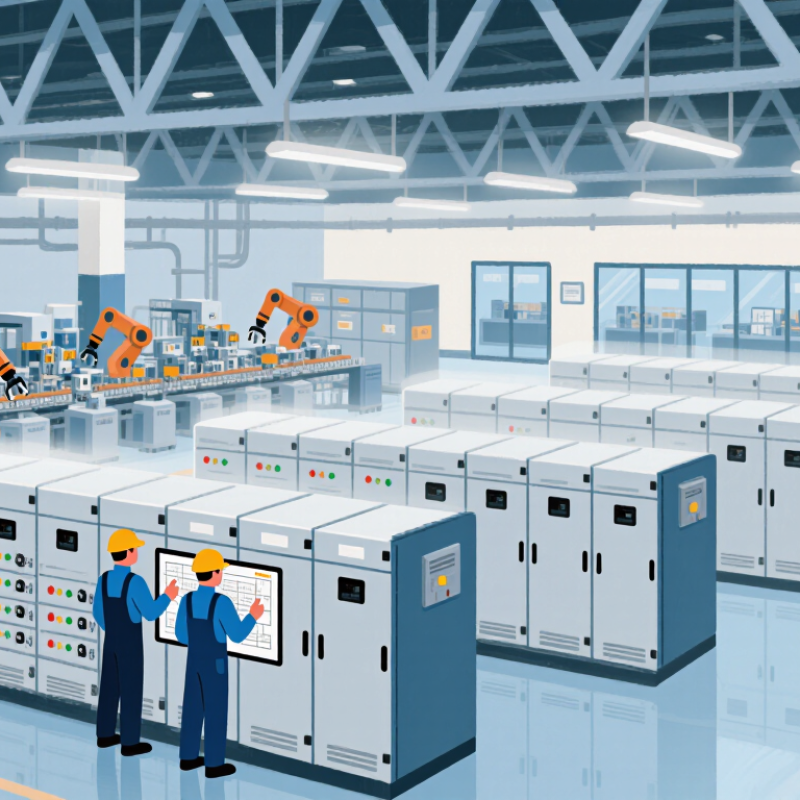
What Are the Top China Low Voltage Switchgear Suppliers?

What Is Low Voltage Switchgear and Why Does China Matter?

Low voltage switchgear manages electrical circuits below 1,000 volts in many commercial and industrial systems. It distributes power, protects cables, and isolates faulty equipment during maintenance. A typical assembly may include circuit breakers, busbars, contactors, meters, and protective relays inside a metal enclosure.

China matters because its electrical manufacturing base combines large-scale production with extensive component supply. Many factories can customize cabinet dimensions, busbar layouts, protection settings, and connection methods for different projects. This flexibility helps contractors manage costs and delivery schedules. However, low prices alone should not determine supplier selection. A reliable supplier should provide verified test reports, clear drawings, traceable materials, and evidence of routine quality inspections.

In practical purchasing, examine the copper busbar finish, enclosure thickness, wiring labels, and terminal spacing. Ask how technicians perform temperature-rise, insulation, and short-circuit tests. Documentation should match the delivered configuration, not an older sample. International projects may also require compliance with recognized IEC standards and local electrical rules. Factory audits can reveal details that brochures hide, such as poor cable routing or inconsistent assembly work. China offers strong manufacturing capacity, but quality still varies between suppliers. That is where careful technical review matters. Even experienced buyers can overlook after-sales response time, spare-part access, or unclear responsibility for field modifications.

How Are China’s Low Voltage Switchgear Suppliers Evaluated?

Evaluating China’s low voltage switchgear suppliers requires more than comparing quotations. China Electricity Council reported that national electricity consumption reached 9.22 trillion kWh in 2023, increasing 6.7% year on year. This growth supports demand for reliable distribution equipment. MarketsandMarkets estimated the global low voltage switchgear market at about USD 24.6 billion in 2023, with continued growth through 2028. Suppliers should therefore be judged by capacity, not price alone.

During factory audits, engineers usually check compliance with IEC 61439, temperature-rise test records, short-circuit verification, and enclosure protection ratings.

A dependable supplier can provide traceable certificates, calibrated testing equipment, and consistent busbar workmanship. Review the supplier’s quality system against ISO 9001, but do not treat certification as proof of perfect production.

Inspect sample panels, terminal spacing, labeling, and copper thickness. Small details often reveal larger process weaknesses.

Lead time, spare-part access, and remote technical support also matter. A low quotation can hide thinner materials or incomplete testing.

Tips: Request a recent third-party test report and one finished-panel inspection.

Compare the report’s rated current, short-circuit capacity, IP rating, and test date. Ask for anonymized project evidence from similar environments.

Be cautious when documents look polished but lack serial numbers. I would also repeat key inspections, because one successful sample may not represent every production batch.

Supplier evaluation is never completely objective, and field performance can expose assumptions missed during paperwork reviews.

Who Are the Top China Low Voltage Switchgear Suppliers?

The top China low voltage switchgear suppliers are usually manufacturers with proven factory experience, strong engineering teams, and stable quality systems. They produce distribution boards, motor control centers, capacitor cabinets, and customized low voltage assemblies. Reliable suppliers normally design products according to IEC 61439 and applicable Chinese standards. They also provide routine testing records, wiring drawings, heat-rise data, and traceable component lists.

A serious evaluation should include factory audits, sample inspections, and discussions with technical staff. Ask how the supplier manages copper-bar cutting, insulation clearance, enclosure sealing, and final testing. These details affect safety inside a crowded electrical room. Details matter. Suppliers serving data centers, factories, rail projects, and commercial buildings often understand different load profiles and installation conditions. Their export experience can also simplify documentation and project communication.

However, the largest factory is not always the best choice. A smaller supplier may offer faster engineering support or more flexible cabinet layouts. My practical concern is consistency: one excellent sample cannot prove every production batch. Not every quote wins. Buyers should compare test capacity, after-sales response, spare-part availability, and delivery records instead of focusing only on price. A supplier that explains technical limitations honestly may deserve more trust than one promising everything. Mistakes can still happen, so clear inspection points and written acceptance criteria remain essential.

What Products and Services Do These Suppliers Offer?

What Are the Top China Low Voltage Switchgear Suppliers?

Reliable low voltage switchgear suppliers usually offer more than standard cabinets. Their product ranges may include distribution boards, motor control centers, automatic transfer panels, capacitor compensation units, and busbar systems. They also supply circuit breakers, protective relays, meters, control devices, and weather-resistant enclosures. Product selection should match the site’s voltage, current, fault level, and installation environment.

Good suppliers provide engineering support before production. They review single-line diagrams, prepare layout drawings, and recommend suitable protection settings. Custom services may cover cabinet dimensions, cable entry positions, paint colors, communication ports, and internal separation. Some teams support factory acceptance testing and provide inspection records, wiring diagrams, and operation manuals. Clear documentation matters during commissioning.

Ask about routine testing, temperature-rise tests, insulation checks, and short-circuit verification. Compliance with relevant IEC or national standards should be supported by traceable reports, not vague claims. Experienced suppliers can guide installation, energization checks, troubleshooting, spare-parts planning, and operator training. Remote assistance is useful, but it cannot replace skilled local inspection.

No catalog is perfect. A lower price may hide thinner materials, limited testing, or weak after-sales support. Buyers should examine sample drawings, terminal quality, copper-bar construction, delivery records, and warranty conditions. Suppliers that explain technical limits honestly are often more dependable than those promising everything. That detail deserves attention.

What Are the Top China Low Voltage Switchgear Suppliers? - What Products and Services Do These Suppliers Offer?
Supplier Category Typical Product Portfolio Common Rated Voltage Typical Current Range Applicable Standards Engineering and Manufacturing Services Typical Application Sectors
Large low-voltage switchboard manufacturers Main distribution boards Motor control centers Power factor correction panels Automatic transfer switch panels Up to 690 V AC for many standard assemblies Typically from several hundred amperes to approximately 6,300 A, depending on the assembly system IEC 61439 series; corresponding GB/T 7251 series requirements may apply in China Electrical design, busbar sizing, short-circuit verification, enclosure fabrication, routine testing, documentation, and factory acceptance testing Industrial plants, commercial buildings, infrastructure projects, utilities, and data centers
Export-oriented OEM and contract manufacturers Custom switchboards Distribution panels Control cabinets Packaged electrical assemblies Commonly 400 V, 415 V, 440 V, 480 V, or 690 V AC, subject to project requirements Often configured from low-current outgoing feeders to several thousand amperes IEC 61439, IEC 60947, IEC 60529, and destination-market requirements where applicable OEM production, customer drawings, private-label assembly, multilingual technical files, export packing, and shipment coordination International commercial, manufacturing, renewable-energy, and building-services projects
Modular panel and form-separated assembly specialists Form 1 assemblies Form 2 assemblies Form 3 assemblies Form 4 assemblies Usually up to 690 V AC for low-voltage power assemblies Selected according to feeder, incomer, and busbar requirements; high-current designs may use segregated busbar compartments IEC 61439-1 and IEC 61439-2; enclosure protection commonly evaluated under IEC 60529 Internal separation design, thermal management, compartment layout, withdrawable or fixed arrangements, and maintenance-access planning Process industries, hospitals, airports, commercial complexes, and high-availability facilities
Motor control and automation cabinet suppliers Motor control centers DOL starters Soft-starter panels Variable-speed drive cabinets PLC control panels Commonly 380–415 V AC three-phase systems; other voltages can be engineered for specific markets Motor feeder ratings vary widely; individual motor feeders are selected according to motor power and starting method IEC 61439, IEC 60204-1 for machinery-related applications, and IEC 60947 equipment requirements Motor-load calculations, control logic, PLC and HMI integration, programming, panel wiring, simulation, commissioning, and operator training Water treatment, manufacturing lines, HVAC systems, mining, material handling, and process automation
Energy and renewable-project switchgear suppliers AC combiner panels Grid-connection panels Battery system distribution panels Generator synchronization panels Typically 400–690 V AC on the low-voltage side, depending on the system architecture Configured for inverter, battery, generator, or grid-interface capacity IEC 61439, IEC 60947, IEC 60529, and project-specific grid-code or utility requirements Load-flow coordination, protection coordination, metering integration, surge protection selection, remote monitoring interfaces, and site commissioning Solar photovoltaic plants, energy-storage systems, wind projects, standby generation, and microgrids
Building-services and commercial distribution panel suppliers Main low-voltage boards Floor distribution boards Lighting panels Emergency power panels Metering sections Commonly 230/400 V AC or 240/415 V AC systems Usually designed from small final-distribution ratings to several thousand amperes for main boards IEC 61439, IEC 60364 installation principles, IEC 60529, and applicable local electrical codes Single-line diagrams, circuit schedules, metering layouts, protection coordination, labeling, inspection, and installation support Office buildings, retail facilities, hotels, residential developments, schools, and public buildings
Stainless-steel and harsh-environment enclosure specialists Outdoor switchboards Corrosion-resistant panels Weatherproof enclosures Hygienic control cabinets Commonly up to 690 V AC, subject to equipment selection and environmental conditions Designed to suit the required incomer, feeder, and busbar ratings IEC 61439 and IEC 60529; additional environmental or sector requirements may apply Ingress-protection design, material selection, thermal analysis, anti-condensation heating, sunshades, cable-entry planning, and corrosion protection Food processing, wastewater treatment, coastal facilities, chemical plants, outdoor utilities, and marine-related installations
After-sales and project-integration providers Replacement assemblies Retrofit sections Protection upgrades Remote monitoring solutions Matched to the existing site voltage and distribution architecture Selected from the existing installation data and the required upgrade capacity Applicable IEC or GB/T assembly and component standards, plus the customer's maintenance and safety procedures Site surveys, reverse engineering, retrofit design, shutdown planning, installation supervision, testing, spare parts, maintenance, and troubleshooting Operating factories, aging commercial buildings, infrastructure assets, and brownfield upgrade projects
The categories above describe common supplier capabilities and technically recognized product configurations in China's low-voltage switchgear market. Actual voltage, current, protection, enclosure rating, certification, delivery time, and testing scope must be confirmed against the supplier's approved drawings, component list, type-test evidence, and project specifications.

How Can Buyers Choose the Right Chinese Supplier?

Choosing a Chinese low voltage switchgear supplier requires more than comparing quotations. Start with the project’s voltage, rated current, fault level, IP rating, and installation environment. Ask whether the proposed assembly meets IEC 61439 requirements and applicable local standards. Request routine test records, design verification evidence, and clear component data. A serious supplier should explain busbar material, temperature-rise control, insulation clearance, and protective-device coordination in plain language. Avoid vague answers. They usually become expensive later.

Visit the factory, if possible. Check sheet-metal cutting, copper-bar processing, torque control, wiring labels, and final inspection areas. A clean showroom is not enough. Production discipline matters more. Verify experience with similar projects, not just years in business. Request relevant references, delivery photos, and redacted acceptance documents. Confirm who performs testing and whether calibrated instruments are available. A pre-shipment inspection should check dimensions, interlocks, labeling, wiring continuity, dielectric strength, and functional operation.

Insist on drawings before production. Compare approved drawings with the delivered panels. Also examine warranty terms, spare-parts support, response time, packaging, and export documentation. Payment milestones should reflect measurable progress. Do not select the lowest price automatically. Thin copper, weaker enclosures, or rushed testing can create failures after installation. Paperwork alone is not proof. Even a capable supplier can make a drawing mistake or miss a site change. Record every decision, approve revisions formally, and keep an independent engineer involved when the application is critical.

FAQS

What is low voltage switchgear?

It manages electrical circuits below 1,000 volts. It distributes power and protects cables. It can isolate faulty equipment during maintenance. Typical parts include breakers, busbars, meters, contactors, and protective relays.

What components are found inside a low voltage switchgear cabinet?

A metal enclosure usually contains copper busbars, circuit breakers, contactors, meters, and relays. Wiring labels help technicians identify each connection. Terminal spacing supports safer inspection and maintenance. Poor cable routing can still create avoidable problems.

Why do many buyers consider Chinese suppliers?

China has large-scale electrical manufacturing and broad component supply. Factories can customize cabinet sizes, busbar layouts, protection settings, and connections. This flexibility may support cost and delivery planning. Low prices alone are not enough.

How should buyers evaluate a supplier?

Review factory capacity, engineering support, testing procedures, and quality records. Request recent third-party test reports. Inspect one finished panel personally or through an independent engineer. A polished document proves little without serial numbers or matching details.

Which technical documents should a supplier provide?

Request electrical drawings, wiring diagrams, component lists, and routine test records. Documents should match the delivered cabinet configuration. Check rated current, short-circuit capacity, IP rating, and test date. Old samples can mislead.

What should engineers inspect during a factory audit?

Inspect copper thickness, busbar finishing, enclosure thickness, terminal spacing, and cable routing. Check whether testing equipment is calibrated. Review temperature-rise, insulation, and short-circuit test procedures. One good sample may not represent every production batch.

Does certification guarantee consistent quality?

No. A quality certificate shows a management framework, not perfect production. Buyers should compare certificates with actual panels and inspection records. Repeated checks are wiser, although they require more time.

What standards and rules may apply to international projects?

Projects may require compliance with IEC 61439 and local electrical regulations. The required enclosure protection rating can vary by installation environment. Confirm requirements before production begins. Late changes can affect wiring, testing, and delivery.

Are large manufacturers always the best suppliers?

Not necessarily. A smaller factory may offer faster engineering support or more flexible cabinet layouts. A larger factory may provide stronger production capacity. The better choice depends on testing, consistency, support, and project fit.

What after-sales details should buyers confirm?

Confirm response times, spare-part access, remote technical support, and responsibility for field modifications. Put acceptance criteria in writing. Clarify who handles design changes after delivery. These details are easy to overlook.

Conclusion

Low Voltage Switchgear is essential for controlling, protecting, and distributing electrical power in commercial buildings, industrial facilities, infrastructure projects, and energy systems. China has become an important manufacturing base because of its broad production capacity, competitive costs, improving engineering capabilities, and ability to support both standard and customized electrical solutions. This overview explains how suppliers are assessed through product quality, safety compliance, technical expertise, manufacturing reliability, testing procedures, delivery performance, and after-sales support.

It also examines the main product and service categories offered by Chinese suppliers, including low-voltage distribution panels, control cabinets, circuit protection equipment, motor control systems, automation solutions, customization, installation guidance, and maintenance assistance. Buyers should compare suppliers carefully by reviewing certifications, project experience, factory capabilities, quality-control processes, communication efficiency, warranty terms, and total ownership costs. Choosing the right partner requires balancing technical requirements, budget, delivery expectations, and long-term service reliability.

Elena

Elena

Elena is a dedicated marketing professional with an exceptional understanding of the company's products and services. With a keen eye for detail and a passion for effective communication, she regularly updates the company’s specialized blog, ensuring that clients and stakeholders are well-informed......