
Power Transformer Insights & Technical Articles
Explore expert perspectives, maintenance guides, and technological advances in power & distribution transformers.
Solar & Wind Transformer Innovations
Technical articles focusing on step-up transformer design for modern renewable energy projects.
Oil & Gas Transformer Applications
Best practices and safety standards for robust transformer operation in extreme environmental conditions.
IEC & ANSI Testing & Standards
In-depth reviews on quality control, insulation analysis, and life-cycle assessment of high voltage transformers.
China Best Transformer Rewinding Services for Global Buyers
Table of Contents
- Transformer Rewinding Services in China: Scope and Core Functions
- How Transformer Rewinding Is Assessed and Diagnosed
- Step-by-Step Transformer Rewinding and Quality Control Process
- Standards, Testing, and Safety Requirements for Global Buyers
- How to Select a Reliable Chinese Transformer Rewinding Provider
- FAQS
- Conclusion
- Related Posts
For global power operators, choosing China Best Transformer Rewinding Services is not simply a search for lower costs. It is a decision about insulation integrity, winding accuracy, testing discipline, and future reliability. A rewound transformer may look clean outside while hidden defects remain inside. That reality deserves attention.
Dr. S. V. Kulkarni, a respected transformer design specialist, has emphasized, “A transformer is only as reliable as its insulation system and the workmanship behind it.” His observation reflects the core challenge of Transformer Rewinding Services. Skilled technicians must inspect the core, record winding dimensions, select compatible conductors, and control paper insulation thickness. Small errors can create uneven voltage stress, local heating, or premature failure.
Practical service providers usually document each stage. They may photograph damaged coils, measure insulation resistance, verify turns ratios, and perform winding resistance tests. Depending on the project, buyers may also request induced-voltage, no-load, load-loss, and oil-quality testing under applicable IEC 60076 requirements. The exact test plan should match the transformer’s design and operating environment.
Experience matters.
A reliable workshop should explain its repair limits, lead times, material sources, and warranty conditions clearly. It should also provide traceable reports, not vague assurances. Some suppliers present impressive equipment but offer weak technical communication. That is a warning sign.
This guide examines how international buyers can evaluate Chinese rewinding specialists, compare technical proposals, and reduce avoidable risks. No process is perfect. Even experienced engineers must question assumptions, especially when historical drawings are missing or the transformer has suffered severe thermal damage.
Transformer Rewinding Services in China: Scope and Core Functions
China Best Transformer Rewinding Services for Global Buyers
Transformer Rewinding Services in China: Scope and Core Functions
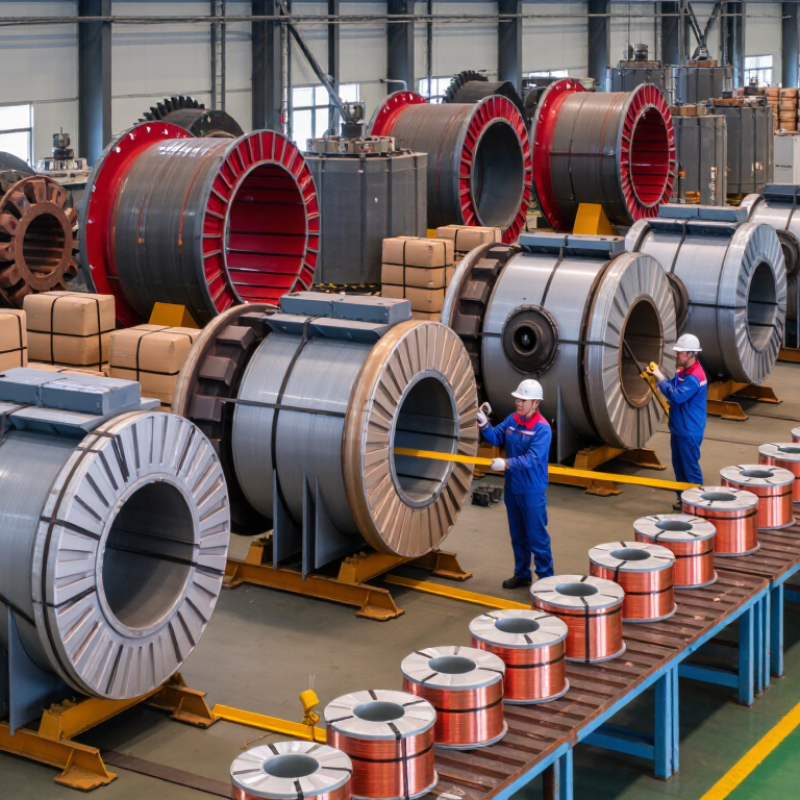
China-based transformer rewinding services cover oil-immersed, dry-type, distribution, and power transformers. The work normally includes fault diagnosis, coil removal, conductor replacement, insulation rebuilding, core inspection, vacuum drying, oil treatment, and electrical testing. Skilled teams also examine bushings, tap changers, seals, and cooling systems. A proper service report should record winding resistance, insulation resistance, turns ratio, and applied-voltage test results.
The U.S. Department of Energy estimates that distribution transformer losses represent about 2.5% of total national electricity consumption. This figure shows why accurate rewinding matters. The IEA Electricity 2024 report also highlights the growing need for stronger grid investment and equipment reliability. In practice, Chinese service providers may support factory repairs, containerized equipment, and urgent field work. However, rewinding is not always a complete solution. Damaged cores, aged insulation, or repeated overheating can make replacement more practical. That decision requires testing, not guesswork.
Tips: Ask for winding drawings, material specifications, test records, and applicable IEC or IEEE references. Confirm copper or aluminium conductor use before production. Request photos of coil forming and insulation layers. Check drying temperature records carefully. A low quotation can hide weak insulation, limited testing, or poor documentation. Allow time for an independent inspection. Industry experience helps, but every transformer has a different failure history.
How Transformer Rewinding Is Assessed and Diagnosed
Reliable transformer rewinding begins with evidence, not assumptions. Engineers review load history, protection records, oil results, and previous maintenance reports. CIGRE Technical Brochure 642 analyzed 964 transformer failure cases. Its findings place windings, tap changers, and bushings among significant failure areas. This evidence helps inspectors focus on heat damage, insulation aging, loose connections, and mechanical movement.
The assessment continues after the tank is opened. Technicians photograph each winding, measure winding resistance, and compare turns ratios between phases. Insulation resistance and polarization index tests reveal moisture or contamination. Frequency response analysis can identify winding displacement after a short circuit. Dissolved gas analysis, interpreted through IEC 60599 methods, adds clues from hydrogen, methane, acetylene, and carbon monoxide levels. Small details matter. A darkened spacer may indicate long-term overheating, not a single event.
A competent rewinding workshop records conductor dimensions, insulation thickness, clamping pressure, and drying temperature. IEEE guidance, including IEEE C57.152, supports structured field testing and condition evaluation. Yet test results are not infallible. A low resistance reading may reflect temperature differences or poor connections. Diagnosis should combine measurements with operating history and physical evidence. Rewinding decisions then become traceable, reviewable, and more defensible for global buyers.
Step-by-Step Transformer Rewinding and Quality Control Process
Transformer rewinding begins with diagnosis, not immediate disassembly. Technicians record winding resistance, insulation resistance, oil condition, and visible damage. Core joints, clamps, leads, and terminals receive close inspection. Photographs preserve connection details before old windings are removed. This evidence guides the repair plan. Small errors matter.
After draining and securing the unit, technicians remove damaged coils with controlled heat and mechanical tools. They label every lead and measure the original turns, conductor size, insulation layers, and winding height. New conductors must match the approved design and operating requirements. Insulation paper is placed evenly, with careful overlaps at corners and exit points. Technicians control tension during winding to prevent loose turns or crushed insulation. The process is methodical.
Assembly includes drying, pressing, lead connection, and application of insulating materials. Vacuum drying removes moisture before oil filling or final enclosure. Quality control checks winding resistance, ratio, polarity, insulation resistance, and dielectric strength. Visual inspection looks for sharp edges, displaced spacers, oil leaks, and incomplete joints. Test results include equipment settings, temperatures, and operator observations. Not every repair is perfectly predictable. A stubborn temperature rise may require rechecking tension, cooling paths, or measurement assumptions. Global buyers should receive traceable reports, clear photographs, and defined acceptance criteria before shipment.
Standards, Testing, and Safety Requirements for Global Buyers
China Best Transformer Rewinding Services for Global Buyers
Standards, Testing, and Safety Requirements for Global Buyers
Reliable transformer rewinding begins with a clear inspection record. Technicians should document core condition, winding damage, insulation aging, and oil contamination. They should also confirm voltage, power rating, frequency, cooling method, and connection group. IEC 60076, IEEE guidance, and local electrical rules may apply, but requirements differ by destination. Experienced providers explain these differences before work begins.
Testing should cover winding resistance, turns ratio, insulation resistance, and dielectric strength. Larger or critical units may require partial discharge, induced voltage, and impulse testing. Test instruments need calibration records and traceable results. Safety controls matter during lifting, drying, oil handling, and high-voltage testing. Workers need suitable PPE, isolation procedures, grounding, and controlled access. A clean workshop is not enough. Process discipline matters more.
Tips: Ask for a test plan before production. Request photos of damaged parts and replacement materials. Confirm copper grade, insulation class, curing temperature, and final test limits in writing. Keep serial numbers linked to every report. One overlooked connection can create serious field problems. Even careful inspections can miss hidden core damage, so independent verification may be worthwhile. I would not treat a passed ratio test as complete evidence of reliability. Real operating conditions remain less predictable than a workshop report.
How to Select a Reliable Chinese Transformer Rewinding Provider
China Best Transformer Rewinding Services for Global Buyers
How to Select a Reliable Chinese Transformer Rewinding Provider
Choosing a Chinese transformer rewinding provider requires more than comparing prices. Start by reviewing its engineering experience with your transformer type, voltage class, power rating, and insulation system. Ask for clear photographs, winding specifications, repair records, and recent test reports. A capable workshop should explain its process, not simply promise quick delivery.
Inspect how the provider controls materials and workmanship. Copper or aluminium conductors should match the approved design. Insulation materials need documented grades and storage conditions. Ask whether technicians perform core inspections, winding resistance tests, turns-ratio tests, and insulation checks after rewinding. Drying and pressing procedures also deserve attention. Small process details matter. From practical experience, unclear documentation often creates more risk than visible workshop defects. Still, no checklist is perfect; unusual failures may require independent engineering review.
Tips: Request a written scope before production. Confirm repair limits, testing standards, warranty terms, packing methods, and spare-part responsibilities. Visit the facility when possible, or arrange a live video inspection. Check whether the provider can share traceable serial numbers and calibrated instrument records. Communication should be technical and consistent, especially when drawings change. A low quotation can be useful, but it should never replace evidence. Reflect on delivery pressure, too; rushing approval may leave important questions unanswered. Reliable cooperation is built through verifiable details, careful testing, and honest discussion of limitations.
China Best Transformer Rewinding Services for Global Buyers - How to Select a Reliable Chinese Transformer Rewinding Provider
| Evaluation Dimension | Recommended Benchmark for a Reliable Provider | Why It Matters | Evidence Global Buyers Should Request | Recommended Buyer Action |
|---|---|---|---|---|
| Transformer Type and Application | Clear experience with the required transformer category, such as oil-immersed, dry-type, cast-resin, furnace, rectifier, or distribution transformers. | Rewinding methods, insulation systems, cooling arrangements, and testing requirements vary by transformer design and operating environment. | Ask for anonymized project records showing transformer type, rated power, voltage class, frequency, cooling method, and operating industry. | Provide the nameplate, winding diagram, photographs, fault history, and operating conditions before requesting a quotation. |
| Rated Power and Voltage Range | The provider should confirm capability for the complete specification, including rated power, primary and secondary voltage, frequency, vector group, impedance, and tap range. | A winding design that matches only the voltage but not the impedance, vector group, or tap arrangement may cause overheating, circulating current, or poor system compatibility. | Request a preliminary winding calculation or technical data sheet identifying conductor size, turns, current density, insulation level, and impedance target. | Compare the proposed design against the original nameplate and the applicable grid or plant requirements. |
| Conductor Selection | Use copper or aluminum conductor selected according to rated current, thermal limits, available space, mechanical strength, and original design requirements. | Conductor material and cross-sectional area directly affect load loss, temperature rise, short-circuit strength, and efficiency. | Request conductor material, dimensions, insulation type, transposition details where applicable, and conductor inspection records. | Require the quotation to state whether the replacement conductor is copper or aluminum and whether the material matches the approved design. |
| Insulation System | Insulation materials should be compatible with the voltage class, temperature rating, oil or resin system, and required dielectric strength. | Inadequate insulation design is a common cause of partial discharge, inter-turn faults, breakdown, and premature service failure. | Request material specifications for paper, pressboard, Nomex-type materials, varnish, resin, barriers, spacers, and lead insulation, as applicable. | Confirm the insulation class, thermal rating, dielectric withstand requirements, and compatibility with the existing tank or enclosure. |
| Core Inspection and Restoration | The core should be inspected for damaged laminations, insulation deterioration, overheating, displacement, burrs, and grounding abnormalities before rewinding. | Core damage can increase no-load loss, magnetizing current, vibration, acoustic noise, and operating temperature. | Request core inspection photographs, no-load test results where available, core grounding inspection results, and a record of repaired or replaced laminations. | Make core repair or replacement a separately priced item when the original core condition is unknown. |
| Coil Manufacturing Accuracy | The provider should control winding tension, layer alignment, axial height, radial dimensions, lead positioning, clamping pressure, and tap connections. | Dimensional inaccuracies can change dielectric clearances, impedance, mechanical strength, and the ability to reinstall the active part correctly. | Ask for dimensional inspection records, coil photographs before assembly, winding tension controls, and a comparison with the original active-part dimensions. | Approve critical winding dimensions before final assembly, especially for replacement windings installed in an existing core and tank. |
| Drying and Vacuum Treatment | Drying procedures should be defined according to the insulation system and transformer size, with controlled temperature, vacuum, time, and moisture monitoring. | Moisture in cellulose insulation significantly reduces dielectric strength and accelerates aging, especially in oil-filled transformers. | Request the drying procedure, temperature and vacuum records, final moisture-control method, and oil filling or impregnation procedure. | Require documented process records rather than accepting only a general statement that the transformer was “vacuum dried.” |
| Reassembly and Mechanical Strength | Active-part assembly should restore suitable clamping, lead support, clearances, shielding, tap-changer connections, gaskets, and grounding arrangements. | Poor mechanical restoration may result in winding movement, lead damage, oil leakage, abnormal noise, or failure during short-circuit events. | Request assembly photographs, torque or clamping records where applicable, gasket specifications, and a checklist for internal and external connections. | Confirm which components are reused, repaired, or replaced, including bushings, tap changers, gaskets, radiators, fans, and temperature devices. |
| Routine Electrical Testing | Testing should be aligned with the applicable edition of IEC 60076 or the buyer’s required national standard, as specified in the purchase contract. | Routine tests verify that the rewound transformer meets essential electrical, dielectric, and functional requirements before shipment. | Typical records may include winding resistance, voltage ratio, polarity or phase displacement, no-load loss and current, load loss and impedance, insulation resistance, and dielectric tests where applicable. | Define the complete test schedule before production and identify which tests require witness or third-party inspection. |
| Special and Diagnostic Testing | For critical or high-value transformers, consider additional tests such as frequency response analysis, partial discharge, tan delta, oil quality, or dissolved gas analysis according to transformer type and risk level. | Diagnostic tests can reveal winding deformation, insulation deterioration, moisture, abnormal discharge, or internal mechanical problems that routine tests may not detect. | Request a test matrix showing which diagnostic tests are included, optional, or excluded, together with acceptance criteria and laboratory capability. | Use independent testing or witnessed testing for high-voltage, high-capacity, or mission-critical applications. |
| Test Equipment and Calibration | Test instruments should be suitable for the transformer rating and maintained under a documented calibration program, commonly with calibration intervals of 12 months or according to risk. | Uncalibrated or unsuitable instruments can produce unreliable results and make comparison with previous factory or field data difficult. | Request current calibration certificates, instrument model information, test-range details, and laboratory personnel authorization. | Check that the calibration dates cover the planned factory acceptance test period. |
| Quality Management | A documented quality system, preferably certified to ISO 9001, should cover incoming materials, process control, inspection, nonconformance handling, and final release. | Rewinding quality depends on repeatable procedures and traceability, not only on individual technician experience. | Request the quality certificate scope, inspection and test plan, material traceability procedure, nonconformance report format, and sample final dossier. | Verify that the certificate covers the relevant manufacturing or repair activity and is issued by an accredited certification body. |
| Traceability of Materials | Critical materials and components should be traceable to purchase records, inspection results, batch numbers, or supplier certificates. | Traceability supports root-cause analysis, warranty evaluation, and future maintenance decisions. | Request records for conductor, insulation materials, transformer oil, bushings, gaskets, tap-changer parts, and replacement hardware where relevant. | Include document retention requirements and the minimum required records in the purchase order. |
| Lead Time Planning | A realistic rewinding schedule should include inspection, engineering approval, material procurement, winding, drying, assembly, testing, and packing. | Actual lead time depends heavily on transformer size, voltage class, material availability, repair scope, and test requirements. | Request a milestone schedule rather than a single delivery date, with defined dates for inspection, design approval, production completion, testing, and dispatch. | Treat any lead-time estimate as provisional until the transformer has been inspected and the winding design has been approved. |
| Quotation Transparency | The quotation should separate engineering, rewinding, replacement materials, testing, packing, inland transport, export documentation, and optional services. | A low initial price may exclude core repair, oil treatment, replacement accessories, special testing, or site commissioning. | Request a line-item quotation with inclusions, exclusions, assumptions, validity period, payment terms, and change-order conditions. | Compare technically equivalent quotations rather than comparing only the total price. |
| Warranty and Claims Process | The warranty should define the coverage period, starting point, exclusions, response time, evidence requirements, and remedy for verified workmanship defects. | A written warranty provides a practical framework for resolving defects related to materials, workmanship, testing, or assembly. | Request the warranty document, claim procedure, technical support contact, spare-parts policy, and responsibilities for inspection and transport. | Ensure the warranty terms are included in the signed commercial contract and do not conflict with local import or service obligations. |
| Export Packing and Shipping Protection | Packing should protect against moisture, vibration, impact, corrosion, and incorrect lifting during international transport. | Transformers and accessories may be exposed to extended storage, sea freight humidity, temperature changes, and multiple handling operations. | Request packing specifications, moisture protection details, lifting points, center-of-gravity markings, shock indicators where appropriate, and shipping photographs. | Confirm whether oil is shipped inside the transformer or separately and verify the required customs, dangerous-goods, and import documents. |
| Technical Documentation | The final documentation package should match the delivered transformer and include approved drawings, test reports, material records, manuals, and maintenance recommendations. | Accurate documentation is required for commissioning, future diagnostics, insurance, regulatory review, and maintenance planning. | Request a document index covering nameplate data, winding design information, dimensional drawings, wiring diagrams, test reports, oil data, packing lists, and certificates. | Make document submission and approval a defined project milestone before shipment. |
| After-Sales Technical Support | The provider should offer remote technical support and clearly define the availability of field service, commissioning assistance, troubleshooting, and spare parts. | Correct installation, oil filling, testing, energization, and early-life monitoring can significantly reduce commissioning risk. | Request service contact details, response targets, commissioning instructions, recommended spare parts, and escalation procedures. | Confirm support coverage in the destination country and identify who is responsible for local labor, travel, and emergency service costs. |
Note: The benchmarks above are general procurement guidelines. Final technical requirements, acceptance criteria, testing scope, delivery schedule, and warranty conditions should be confirmed against the transformer nameplate, applicable standards, site conditions, and the signed contract.
FAQS
Technicians first record winding resistance, insulation resistance, oil condition, and visible damage. Photographs preserve original connections. Small errors matter.
They should measure turns, conductor size, insulation layers, winding height, and lead positions. Every lead needs a clear label. Guesswork is risky.
Conductors must match the approved design and operating requirements. Insulation paper needs even overlaps at corners and exit points. Controlled tension prevents loose turns and crushed insulation.
Vacuum drying removes moisture before oil filling or final enclosure. Moisture can weaken insulation and affect test results. Drying time should be documented.
Common checks include winding resistance, turns ratio, polarity, insulation resistance, and dielectric strength. Larger units may need additional high-voltage tests. One passed test is not enough.
Workers need suitable protective equipment, isolation procedures, grounding, and controlled access. Lifting, oil handling, drying, and high-voltage testing require separate controls. A clean workshop is not enough.
Review experience with the transformer type, voltage class, power rating, and insulation system. Request repair records, photographs, test reports, and calibrated instrument records. Price alone proves little.
Ask for traceable serial numbers, test settings, temperatures, operator observations, and defined acceptance limits. Confirm packing, warranty terms, and spare-part responsibilities. Clear records reduce confusion.
No. Hidden core damage, cooling problems, or unusual temperature rise may remain. I would not treat a passed ratio test as complete proof. Independent verification may still help.
Conclusion
China’s Transformer Rewinding Services provide a practical solution for restoring the performance and extending the service life of aging or damaged transformers. The work typically includes inspection, fault diagnosis, winding removal, core and insulation assessment, coil rewinding, assembly, drying, oil treatment, and final performance verification. Before repair begins, technicians evaluate electrical test results, operating history, visible damage, insulation condition, and winding configuration to identify the root cause and define the correct repair plan.
A reliable rewinding process requires precise measurements, suitable materials, controlled manufacturing procedures, and thorough quality checks at every stage. Global buyers should confirm that the provider follows applicable technical standards, maintains safe working practices, and can supply test records covering insulation resistance, winding resistance, ratio accuracy, dielectric strength, and other relevant performance indicators. When selecting a Chinese provider, buyers should assess technical experience, testing capabilities, production control, communication, documentation, delivery planning, and after-sales support to ensure consistent and dependable results.

Blog Tags: